Berberine, the Natural Metformin: An Evidence Review
By Longevity Lab · Published: July 21, 2026
Based on peer-reviewed research — full source list at the end of this article. This is educational information, not medical advice.
- Berberine is a plant alkaloid that activates AMPK, the cell’s energy sensor, the same target metformin acts on.
- It lowers blood glucose and lipids, and in several trials its metabolic effect was comparable to metformin.
- There is no direct evidence that it extends human life. Lifespan extension has been shown only in model organisms.
- It is poorly absorbed and interacts heavily with medications through liver enzymes.
- This is not a harmless herb. It needs caution and a check against everything else you take.
Berberine is a plant alkaloid that activates AMP-activated protein kinase (AMPK), the same cellular energy sensor metformin acts on, and in randomized trials at 900–1500 mg per day it lowers fasting glucose, HbA1c, total cholesterol and triglycerides. The “natural metformin” label holds up for metabolism and fails for longevity: no study has tested what berberine does to human lifespan, and it raises the blood levels of many prescription drugs. Here is what the comparison gets right, what berberine actually delivers, and why its safety caveats are serious.
What berberine is and how it works
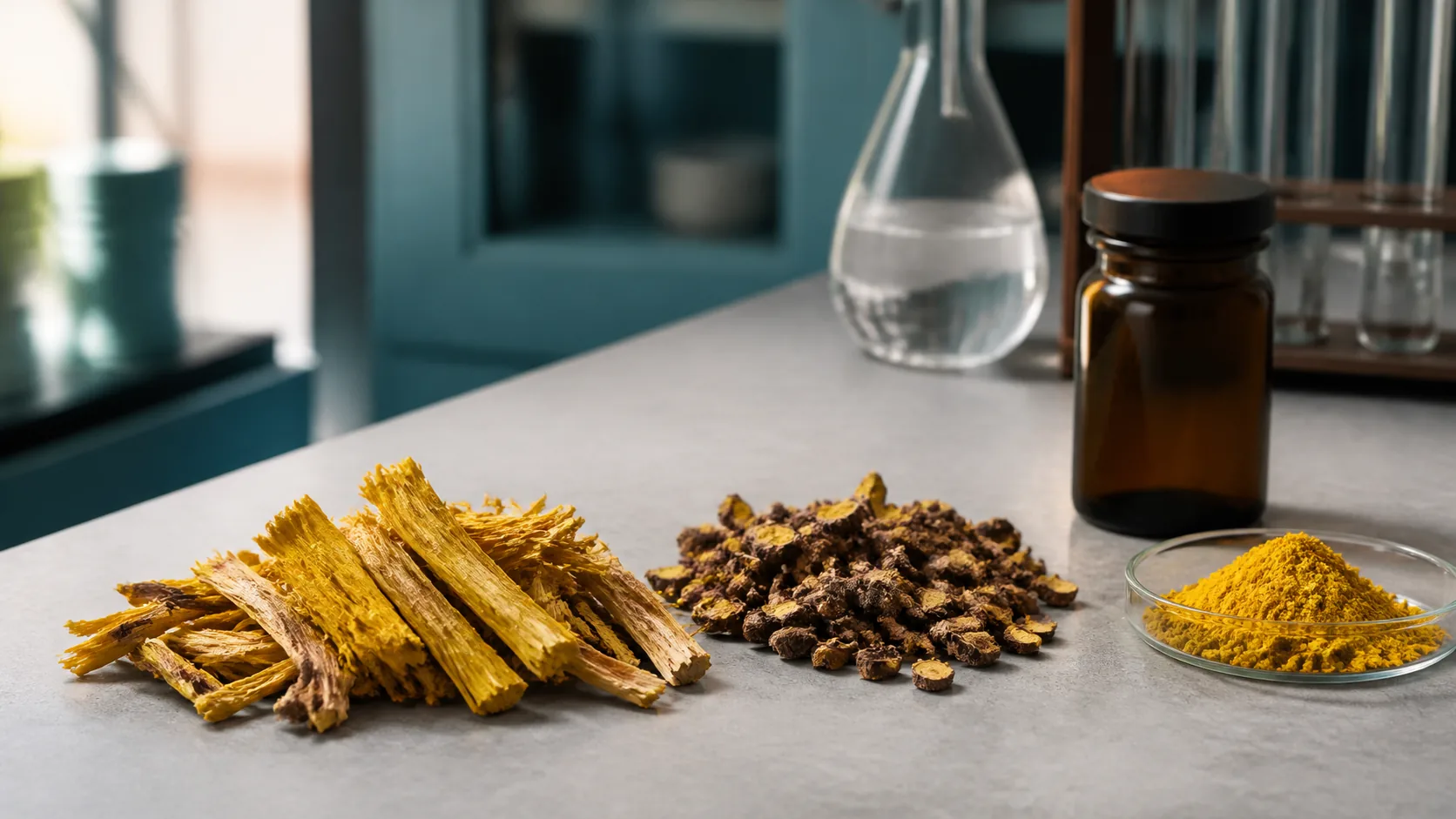
Berberine is a yellow alkaloid from plants such as barberry, Coptis and Oregon grape, used in traditional medicine for centuries. Its main molecular effect is activation of AMPK, the cell’s low-energy sensor. AMPK activation increases glucose uptake, reduces fat synthesis and switches on processes associated with caloric restriction.
AMPK is also how metformin works, which is why berberine gets treated as its plant counterpart. Berberine additionally acts on the gut microbiome, and that may partly explain its metabolic effects.
The comparison with metformin is accurate at the level of the target, but it is not complete. AMPK is the cell’s low-energy sensor: when energy runs short, it switches the cell from storing to spending. Muscle takes up more glucose, the liver slows glucose production, and fat synthesis is suppressed. Berberine, unlike metformin, also reshapes the composition of the gut flora to a noticeable degree, and part of its glucose-lowering action appears to run through that route. So “natural metformin” is a convenient but simplified metaphor. The mechanisms overlap without matching.
What the research on berberine shows
Metabolic effects in humans
This is berberine’s strong suit. In randomized trials in people with type 2 diabetes and metabolic syndrome, berberine (usually 0.9–1.5 g per day) lowered fasting glucose, Glycated hemoglobin (HbA1c), total cholesterol and triglycerides. In some of those trials its glucose-lowering effect was comparable to metformin. That connects berberine to the control of glycation, one of the mechanisms of aging. Glucose, triglycerides and HDL are also the inputs of METS-IR: metabolic score for insulin resistance, so the same blood panel used to follow berberine also yields an insulin-sensitivity estimate.
Longevity evidence
Here the evidence is thin. Lifespan extension has been shown in model organisms, in flies and in individual rodent studies, but no dedicated study has looked at human lifespan. Berberine demonstrably improves metabolic markers. Calling it a human geroprotector is premature, because that step is extrapolation.
The case for berberine as a longevity compound is indirect. Disturbed glucose and lipid metabolism is a risk factor for age-related disease, so a substance that improves those numbers could in theory push the associated conditions further away. That is a chain of assumptions, not direct proof. Improving a marker is not the same as extending life, and medicine has a history of drugs that fixed lab values without changing outcomes, sometimes making them worse. The accurate formulation is this: berberine demonstrably helps metabolism, and its contribution to human longevity remains a hypothesis.
Berberine dosage and bioavailability
| Parameter | Value | Notes |
|---|---|---|
| Typical dose in RCTs | 900–1500 mg/day | Split into 2–3 doses |
| Timing | With or after food | Reduces gut discomfort |
| Bioavailability | Very low (<5%) | Poorly absorbed |
| Half-life | Short | Hence the split dosing |
Because bioavailability is low, berberine is taken in divided doses together with food. Poor absorption and a short duration of action are exactly what the split schedules are compensating for.
Safety and drug interactions
The main problem with berberine is not toxicity. It is drug interactions. Berberine inhibits cytochrome P450 enzymes (CYP3A4) and the P-glycoprotein transporter, which raises the blood concentration of many medicines: Statins, some anticoagulants, immunosuppressants and blood pressure drugs. That can amplify both their effect and their side effects.
The common side effects are gastrointestinal: diarrhea, cramping, constipation. Berberine is contraindicated in pregnancy and breastfeeding, because it can reach the child and cause jaundice in newborns. If you take any prescription medication, do not add berberine without talking to your doctor first.
Who berberine may make sense for
The whole profile points to one conclusion. Berberine is a metabolic tool first, not a daily longevity supplement. It is worth considering for people with disordered carbohydrate and lipid metabolism, and always together with a doctor, because that is precisely the group most likely to be on other medication that berberine conflicts with. Whether you belong in that group is usually settled by waist, blood pressure, glucose, triglycerides and HDL, the five criteria behind Metabolic syndrome — the hidden pandemic of the 21st century.
For a healthy person with normal lab results, berberine has little point. There is nothing to improve in numbers that are already normal, and the risk of interactions and side effects stays. Which of those two descriptions fits you is easier to judge after checking your Risk of developing diabetes, which weighs fasting glucose, HbA1c, weight, waist and lifestyle together. Moving the same metabolism with safer levers is far more reliable: controlling glycation and sugar in your diet, staying physically active, and losing excess weight. Berberine can sit on top of that foundation when there is an indication, but it cannot replace it.
The quality of the supplements themselves is worth remembering too. Berberine is sold over the counter, so the amount of active compound and the purity of the raw material can vary widely between manufacturers, contaminants included. That adds another layer of uncertainty to a substance that already demands caution because of its interactions. Taken together, this is why berberine is better understood not as a safe herb but as a pharmacologically active compound that deserves the same seriousness as a prescription drug.
Verdict: how justified is taking berberine
Berberine is a proven metabolic agent, not a confirmed human geroprotector, and it carries a tangible risk of drug interactions.
| Criterion | Assessment |
|---|---|
| Metabolic effects in humans | Strong (RCTs: glucose, lipids) |
| Human longevity evidence | None |
| Mechanism | Understood (AMPK, microbiome) |
| Safety | Moderate, with a risk of drug interactions |
| Bottom line | Can help metabolism, but only with drug compatibility checked and under medical supervision |
The practical takeaway: berberine is not a harmless longevity supplement, it is a substance with pharmacological force. If you take medication, discussing it with your doctor is mandatory.
Is berberine really like metformin?
On metabolic effects and the AMPK target, largely yes, and in some randomized trials the drop in glucose was comparable. But on human longevity evidence, metformin is far better studied.
Why is berberine taken 2–3 times a day?
Its bioavailability is very low and its action is short, so the daily dose is split across several servings taken with food.
Can you take berberine with statins?
Only with caution and only after clearing it with your doctor: through CYP3A4, berberine raises the blood concentration of statins and a number of other drugs.
Are there side effects?
The gut is affected most often: diarrhea, cramping, constipation. Berberine is contraindicated in pregnancy and breastfeeding.
Sources (4)
Disclaimer. This article is for information only and does not replace medical advice. Talk to a qualified clinician before changing anything about your health.