Fiber, the Microbiome, and Longevity
By Longevity Lab · Published: July 21, 2026
Based on peer-reviewed research — full source list at the end of this article. This is educational information, not medical advice.
- Fiber is fuel for the helpful bacteria in your gut, which respond by producing short-chain fatty acids.
- High fiber intake is associated with lower all-cause mortality and lower heart disease risk in large studies.
- A “healthy” age-related shift in the microbiome (rising diversity) is associated with better survival in older adults.
- Most people eat noticeably less fiber than the benchmark of about 25–30 g per day.
- The simple route is more vegetables, legumes, whole grains, and berries; supplements are secondary.
Fiber is the link between what you eat and how your gut ages: you cannot digest it, but the bacteria in your colon ferment it into short-chain fatty acids that feed the gut lining and calm inflammation. In large pooled analyses, high fiber intake is associated with lower all-cause mortality, and the working target is 25–30 g of fiber a day. Gut health is a fashionable topic, but the science underneath it is concrete, and the main character is not an expensive probiotic. It is ordinary fiber. Here is how fiber shapes the Gut microbiome and longevity, how much you need, where to get it, and why food beats jars of bacteria.
How fiber feeds the microbiome
Fiber is the plant carbohydrate that human enzymes cannot break down. You do not absorb it, but the bacteria in your large intestine live on it. As they break fiber down, they produce short-chain fatty acids such as butyrate, which feed the cells of the gut wall, strengthen the gut barrier, and gently lower inflammation, the low-grade kind that blood tests track through Inflammatory markers. That is how diet directly shapes the composition and the work of the microbiome, the community of trillions of microbes that influences metabolism, immunity, and even mood.
What the research on fiber and the microbiome shows
The evidence is consistent along two lines:
- Fiber and mortality. A large analysis found that people with a high fiber intake have lower all-cause mortality and lower risk of coronary heart disease, stroke, type 2 diabetes, and bowel cancer. The association is dose-dependent: within reason, more fiber means more benefit.
- The microbiome and aging. A “healthy” age-related shift in the microbiome, meaning rising individual diversity, is associated in studies with better health and better survival in older adults, while a depleted composition is associated with worse outcomes.
So fiber is not about digestion in the narrow sense. It is about systemic health and longevity, the same slow biology laid out in Longevity — the science of aging more slowly.
How much you need and where to get it
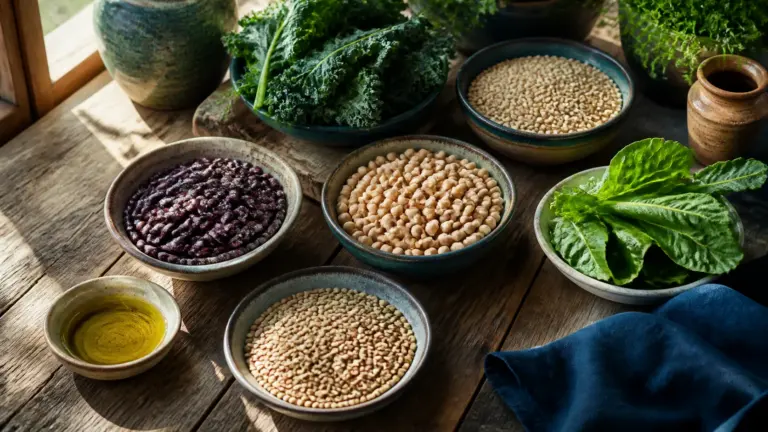
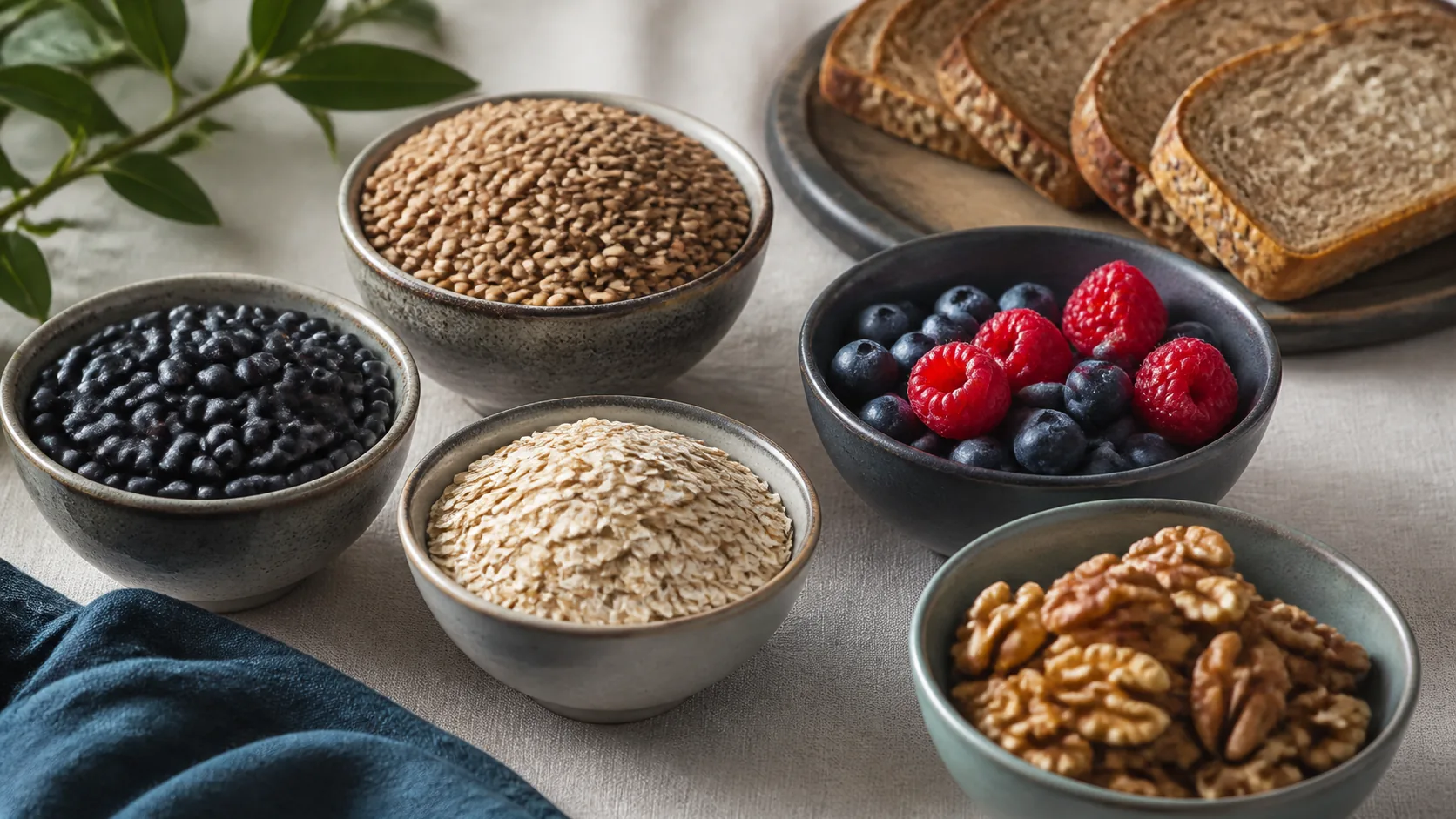
The benchmark is 25–30 g of fiber a day, and most people get only 12–15 g. The best sources:
| Food | Fiber (approximate) |
|---|---|
| Legumes (lentils, beans), 100 g cooked | 6–8 g |
| Oats, 40 g dry | 4 g |
| Whole-grain bread, 2 slices | 4–5 g |
| Vegetables, large portion | 3–5 g |
| Berries or an apple | 3–4 g |
| Nuts, a handful | 2–3 g |
Variety matters more than any single superfood, because different types of fiber feed different bacteria. The traditional diet of the Blue Zones is built on legumes and whole plant foods, and that is one likely reason for the health of the people who live there.
Fiber, blood sugar, and weight
Fiber brings side benefits too. It slows the absorption of sugar and flattens the glucose spike after a meal, which lowers both glycation and diabetes risk. If you want to know where you stand before changing anything, a screening tool for the Risk of developing diabetes weighs fasting glucose, HbA1c, waist and lifestyle together. Fiber also increases satiety, so you eat more moderately without counting calories, and that steadier eating usually reads more clearly on a waist-based measure such as the Waist-to-height ratio (WtHR) than on the bathroom scale. All of this makes it one of the most underrated parts of a diet built for longevity, in the spirit of Mediterranean eating.
How to add fiber without discomfort
- Build up gradually. A sudden jump causes bloating; give your microbiome a couple of weeks to adapt.
- Drink enough water: fiber works together with fluid.
- Bet on food rather than powders. Whole foods also bring vitamins and polyphenols.
- Vary your sources: legumes, grains, vegetables, berries, and nuts.
Common questions
Do you need a fiber supplement?
Usually no, if your diet is rich in vegetables, legumes, and grains. Supplements help in specific situations, such as constipation, but they do not replace whole food.
Probiotics or fiber?
For most people fiber, the food for your own bacteria, matters more and costs less than jarred probiotics, whose effects are inconsistent.
Does fiber help you lose weight?
Indirectly, yes: it raises satiety and slows sugar absorption, so you eat more moderately. It is not a fat burner, it is part of a healthy diet.
Why does fiber cause bloating?
When you add it too fast, your bacteria do not have time to adapt. Build up gradually and drink more water, and the discomfort usually passes.
Sources
Sources (3)
- Reynolds A, et al. Carbohydrate quality and human health (dietary fibre). Lancet. 2019;393:434–445. PubMed →
- Wilmanski T, et al. Gut microbiome pattern reflects healthy ageing and predicts survival. Nat Metab. 2021;3:274–286. PubMed →
- Makki K, et al. The impact of dietary fiber on gut microbiota in health and disease. Cell Host Microbe. 2018;23:705–715. PubMed →
Disclaimer. This article is for information only and does not replace medical advice. Talk to a qualified clinician before changing anything about your health.