Taurine and Longevity: Reviewing the Evidence
By Longevity Lab · Published: July 21, 2026
Based on peer-reviewed research — full source list at the end of this article. This is educational information, not medical advice.
- Taurine is an amino sulfonic acid, and its concentration in blood falls with age.
- In a 2023 paper in Science, taurine supplementation extended lifespan in mice and in worms.
- In monkeys, several health markers improved. In humans, taurine levels correlate with health, but causation is not proven.
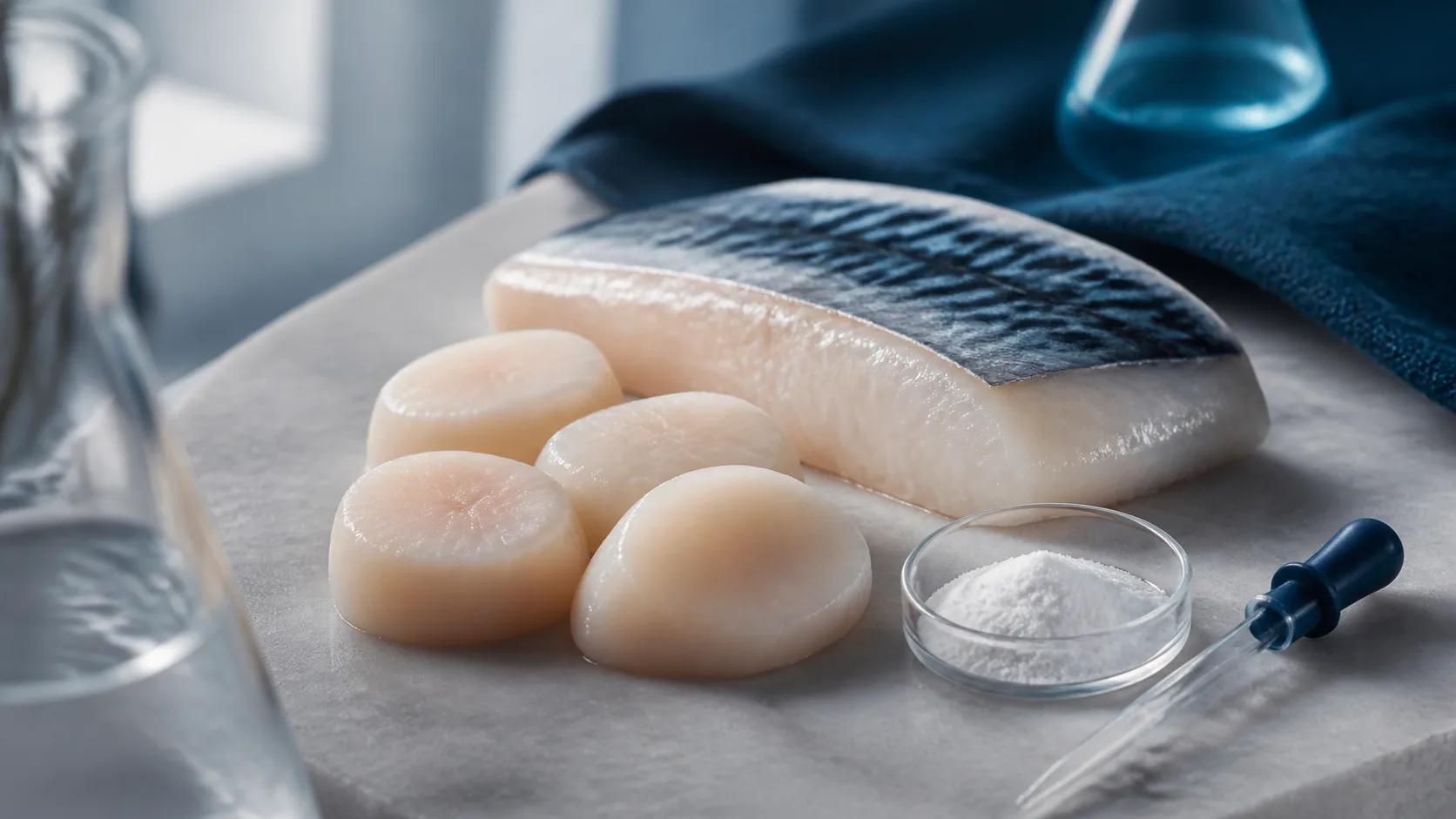
- Food sources are meat, fish and seafood. Plant foods contain almost none.
- Randomized trials in humans are still missing, so for now this is a promising hypothesis.
Here is where the evidence on taurine and longevity actually stands: in a 2023 paper in Science, taurine supplementation raised median lifespan in mice by roughly 10–12% and extended lifespan in worms, but no randomized trial has shown that taurine extends life in humans. The human data are correlational, showing that lower blood taurine is associated with obesity, diabetes and inflammation, which leaves taurine a promising hypothesis rather than a proven geroprotector. Below is what that study really found, and whether it justifies taking taurine today.
What taurine is and how it connects to aging
Taurine is an amino sulfonic acid that the body partly makes on its own and partly obtains from animal foods. It takes part in mitochondrial function, calcium regulation, antioxidant defense, and the workings of the nervous and cardiovascular systems. The key observation behind the current interest: blood taurine concentration declines with age, and in older people and older animals it is markedly lower than in the young. That fall is easy to measure in a lab, but taurine is not yet one of the markers the established methods rely on to date a person’s biology, a landscape mapped out in Biological age tests: what to measure and how to choose a method.
The “taurine deficiency” hypothesis proposes that this decline is not simply a consequence of aging but one of its active drivers. The only way to test that idea is to restore the level and watch what happens.
Biologically the hypothesis is plausible. Taurine concentrates in the most energy-hungry tissues, including the heart, muscle, retina and brain, and it helps keep Mitochondria stable. Mitochondrial function deteriorates with age while Oxidative stress and chronic inflammation accumulate. If taurine counteracts that process, losing it could plausibly accelerate aging in several systems at once. That is what sets taurine apart from narrowly targeted supplements: it acts at the basic level of cellular energy.
What the taurine research shows
Evidence from animal models
In the 2023 study, taurine supplementation increased median lifespan in mice by roughly 10–12% and extended lifespan in worms. In older animals, bone density, muscle strength and mitochondrial function improved, while markers of inflammation and Cellular senescence went down. In other words, the effect showed up in health, not only in the length of life.
Evidence from humans and primates
In macaques, taurine supplementation improved a set of measures: bone mass, liver status and immune markers. In humans, the same paper reported a correlation, with lower taurine levels associated with obesity, diabetes and inflammation. Correlation is not proof, and the arrow may point the other way: disease may lower taurine rather than low taurine causing disease. No randomized trial of lifespan extension in humans exists. The traits that travel with a low taurine level — central obesity, raised glucose and chronic inflammation — are also the ones picked up by a check for Metabolic syndrome — the hidden pandemic of the 21st century, and they are worth knowing about whatever you eventually decide about the supplement.
One additional observation from the same work is worth noting: physical activity raised blood taurine levels in people. That hints that part of the longevity benefit of movement may be mediated by taurine, and it also complicates the picture, because separating the contribution of the molecule itself from an active lifestyle in observational data is extremely difficult. This is why even a strong and recent 2023 paper is an invitation to run clinical trials rather than a substitute for them. In the meantime the exercise half of that association is the part already backed by hard outcomes, and an honest estimate of your Fitness age: the age of your physical fitness says more about your trajectory than any supplement label does.
Food sources and doses of taurine
| Source | Taurine content | Notes |
|---|---|---|
| Seafood (shellfish) | Very high | The richest natural source |
| Fish | High | Easy to fit into a regular diet |
| Meat and poultry | Moderate | Red and white meat |
| Plant foods | Almost none | Risk of low levels on a vegan diet |
Human studies run for other indications, such as cardiac and metabolic ones, used roughly 1–3 g of taurine per day, and those doses were well tolerated. A “longevity dose” for humans has not been established, though. Any number you see is an extrapolation from animal work.
How to think about taurine in practice
The reasonable position on taurine is to avoid a deficiency rather than to take high doses for longevity. The difference matters. Replacing what is missing is a clear and safe goal, while chasing an unproven effect of high doses turns you into your own test subject.
The simplest way to cover taurine is through food. Fish and seafood are the richest sources, and meat and poultry supply a moderate amount. One group stands out as being at risk: people who eat few animal products. Plant foods contain almost no taurine and the body’s own synthesis is limited, so levels can run lower. That is one more reason your protein source starts to matter after a certain age, a topic covered in detail in our article on protein after 40.
If you are considering a supplement, do it deliberately, keeping in mind that there is still no evidence of extended lifespan in humans, and clear it with your doctor if you have kidney disease or are pregnant.
It is also worth holding on to a general principle that applies to every newly promoted geroprotector: one striking study, even in a top journal, is the start of the verification process rather than its conclusion. Taurine needs randomized trials with hard endpoints before anyone can describe it as a proven intervention. Until then, the best tactic is to use the uncontroversial part, which is preventing a deficiency through food, and to wait calmly for data on everything else instead of enrolling yourself in an unfinished experiment.
Safety and contraindications
Taurine has a good safety profile. It has been used for decades, it is an ingredient in infant formula and energy drinks, and doses up to a few grams per day are well tolerated. It is important not to confuse pure taurine with energy drinks, where the main effect comes from caffeine and sugar. If you have kidney disease or are pregnant, any supplement should be cleared with a doctor.
Verdict: how well supported is taking taurine
Taurine is a promising geroprotector that has not been proven in humans. The animal data are strong and recent, while the human data are still only correlational.
| Criterion | Assessment |
|---|---|
| Animal evidence | Strong (Science, 2023) |
| Human evidence | Correlations only; no RCT on longevity |
| Mechanism | Plausible (mitochondria, inflammation) |
| Safety | High at the doses studied |
| Bottom line | Promising; it is sensible to prevent a deficiency through food |
The practical conclusion: making sure you get taurine from food such as fish and seafood is logical, especially if you eat few animal products. Taking high doses for longevity is premature, and the sensible move is to wait for human trials.
Is it true that taurine extends life?
In mice and worms, yes, in the 2023 study. In humans it is not proven: there are only correlations between taurine levels and health.
Is taurine the same thing as an energy drink?
No. In energy drinks the effect comes from caffeine and sugar. Taurine is a separate amino sulfonic acid with its own functions.
Do vegans need taurine?
Plant foods contain almost no taurine, and the body’s own synthesis is limited. On a strictly plant-based diet levels can run lower, which is worth discussing with a doctor.
What dose is safe?
Human studies used 1–3 g per day without serious side effects, but the optimal dose for longevity has not been established.
Sources (4)
Disclaimer. This article is for information only and does not replace medical advice. Talk to a qualified clinician before changing anything about your health.