What a Home Body Fat Scale Really Measures
Bioelectrical impedance infers body fat from how easily a current crosses tissue. Hydration, food and exercise all move it, often by several points.
Movement, sleep, stress, cold, sauna and social connection — the lifestyle factors with the strongest longevity evidence.
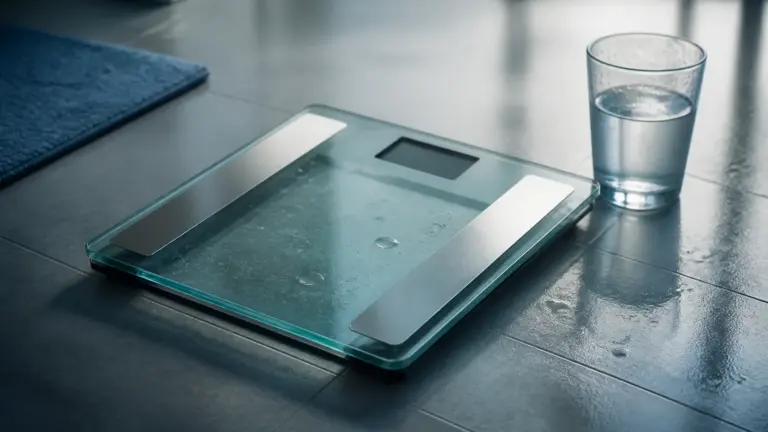
Bioelectrical impedance infers body fat from how easily a current crosses tissue. Hydration, food and exercise all move it, often by several points.
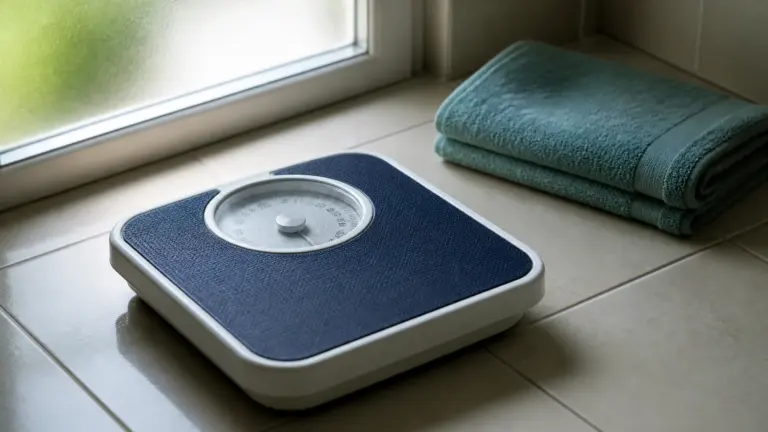
Trials favour daily weighing over weekly, but only if you track the trend. Day-to-day swings of 1-2 kg are water, food and glycogen, not fat.

Muscle falls, fat rises, the scale does not move. The combination predicts disability and mortality more strongly than obesity or sarcopenia alone.

The index counts a kilogram of quadriceps the same as a kilogram of visceral fat. For anyone who trains seriously, that makes the result meaningless.
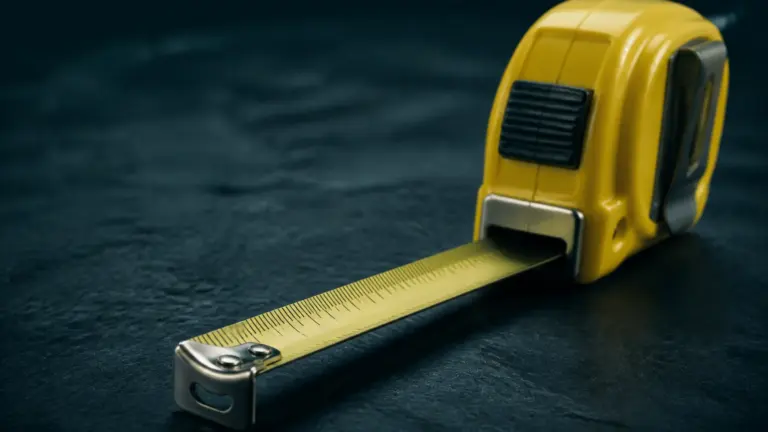
One rule, no chart: keep your waist below half your height. It detects central fat that BMI cannot see, and it does so earlier.
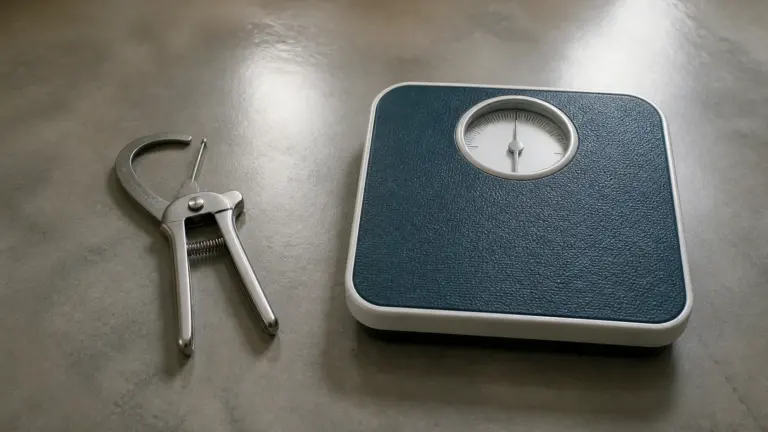
BMI is cheap, repeatable and blind to composition. Body fat percentage measures the thing that matters but depends heavily on how it was measured.

Meta-analyses in adults over 65 put the lowest-mortality range around 24 to 31 — well above the textbook 18.5 to 24.9, and for reasons that make physiological sense.
For men the index errs both ways — flagging muscle as excess mass, and missing the abdominal fat that carries most of the actual cardiometabolic risk.
The cut-offs are identical for both sexes; the bodies are not. Women carry roughly three times the essential fat, and store fat where it is metabolically safer.

Cold showers, plunges and winter swimming: what is actually proven about brown fat, metabolism and alertness, and who should treat cold with real caution.