Glycation and AGEs: How Sugar Ages Your Tissues
By Longevity Lab · Published: July 21, 2026
Based on peer-reviewed research — full source list at the end of this article. This is educational information, not medical advice.
- Glycation is the sugar-coating of proteins: excess sugar in the blood latches onto proteins and degrades how they work.
- The end result is advanced glycation end products (AGEs), which accumulate with age and make tissue stiff.
- AGEs are linked to skin aging, arterial stiffness and the complications of diabetes.
- Some AGEs form inside the body (especially when blood sugar runs high), and some arrive with food, with more of them produced by frying and grilling.
- Blood sugar control, gentle cooking methods and a vegetable-rich diet all lower the load.
Sugar ages your tissues through glycation: when blood sugar is high, sugar molecules bind to proteins and damage them, and the reaction ends in advanced glycation end products (AGEs). Those AGEs cross-link long-lived proteins such as collagen, which stiffens skin and blood vessels and underlies many of the complications of diabetes. The word sounds technical, but the process is simple, and so are the levers that slow it. Here is what glycation and AGEs are, why they build up with age, and what you can realistically do about them.
What glycation is
Glycation is a spontaneous reaction in which sugar molecules (glucose, fructose) bind to proteins or fats with no enzyme involved. Think of caramelization, but happening inside body tissue. The proteins stick together and lose normal function, and the end point of the reaction is a group of compounds called advanced glycation end products, or AGEs. The higher your blood sugar runs and the longer it stays there, the faster the process goes, which is why Glycated hemoglobin (HbA1c) — the same reaction happening to hemoglobin — is used to read average blood sugar.
Why AGEs are linked to aging
AGEs accumulate in long-lived proteins, above all in collagen, which sits in skin, blood vessels and joints. By cross-linking collagen molecules to one another, they make tissue stiff and less elastic. The practical consequences:
- skin loses firmness and wrinkles appear;
- blood vessels get stiffer and lose Arterial elasticity, which raises blood pressure and cardiovascular risk;
- joints and the lens of the eye also suffer from the cross-links;
- in diabetes, high blood sugar sharply accelerates AGE formation, and that sits at the root of many of its complications.
That is why controlling your glucose is not only a diabetes question. It sets the pace at which tissue ages in general, and if you want to see how much stiffening has already built up in your arteries, an estimate of your Vascular age puts a number on it.
Where AGEs come from
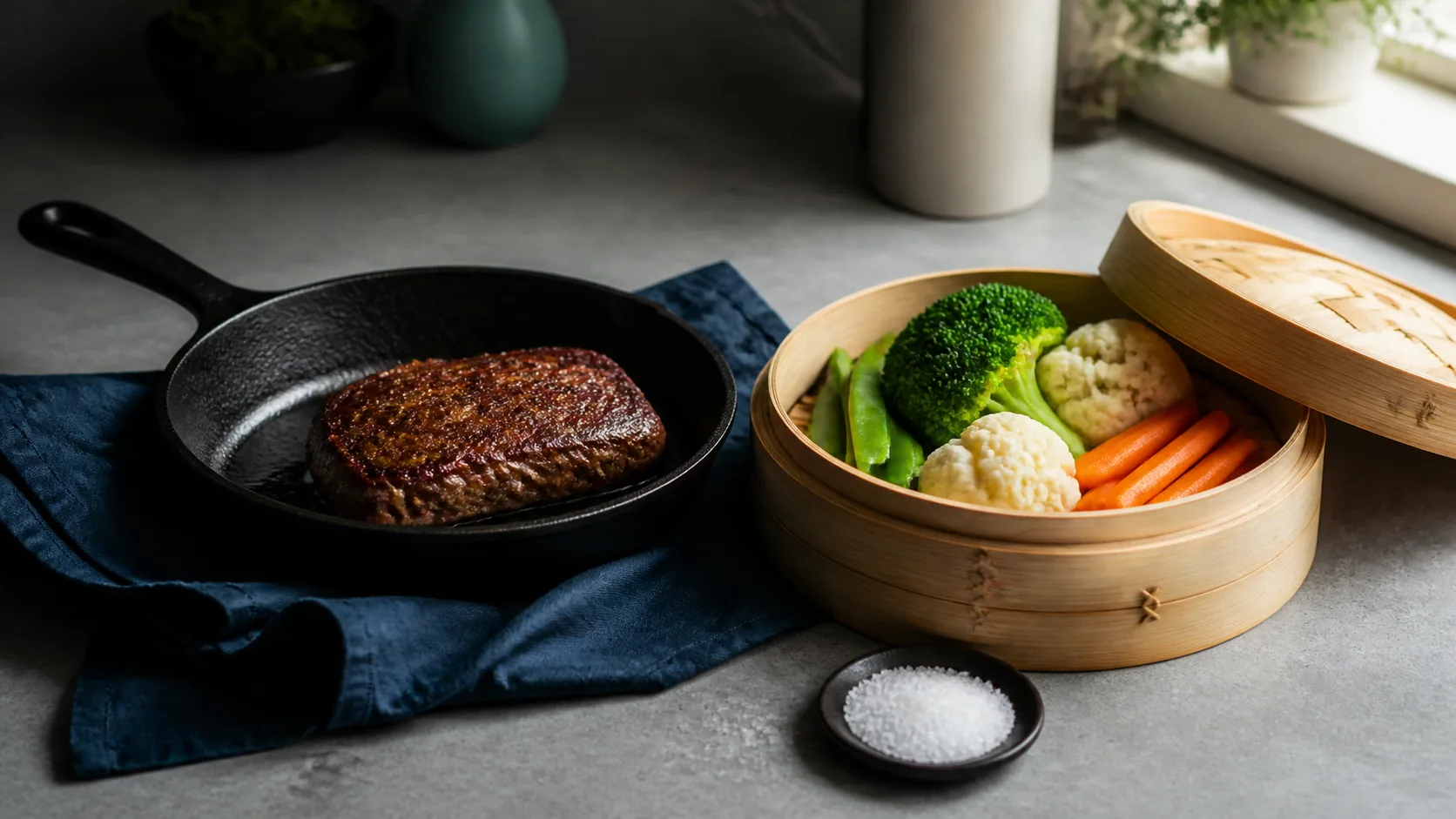
There are two sources. The first is internal: AGEs form inside the body itself, and the higher your average blood sugar, the more of them you make. The second is dietary: AGEs are present in food and form especially fast under dry heat, which means frying, grilling, roasting to a crust and fast food. Boiling, stewing and steaming produce noticeably fewer AGEs. How much dietary AGEs contribute once they are inside the body is still debated, but eating fewer of them looks like a reasonable precaution. Because the internal route tracks how high your average glucose runs, an insulin-sensitivity index such as METS-IR: metabolic score for insulin resistance is a practical way to gauge how hard that route is being pushed.
How to reduce glycation
The good news: almost everything that lowers your AGE load overlaps with ordinary principles of healthy eating and healthy living. If you do not know where your own blood sugar stands, screening your Risk of developing diabetes is a sensible place to start, because glucose is the lever the rest of this list depends on.
- Control your blood sugar — less added sugar and ultra-processed food, more fiber. This is the main lever, and Blood glucose (fasting) is the simplest marker to check it against.
- Cook gently — boil, stew and steam more often; hard frying and grilling to a crust less often.
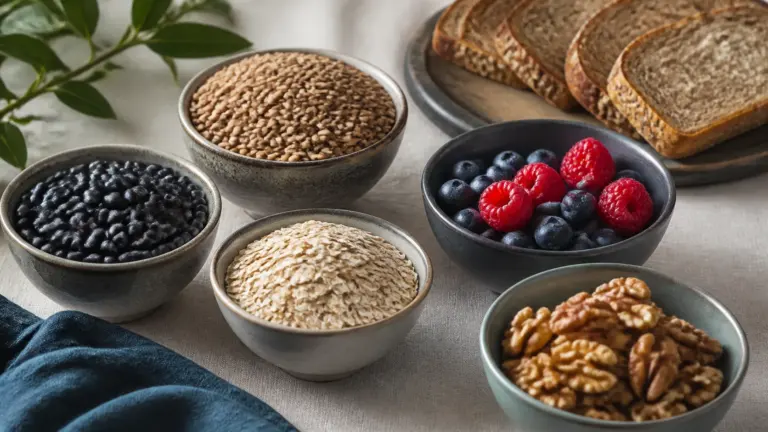
- Build the plate around plants — vegetables, legumes and whole grains (in the spirit of the Mediterranean diet) carry fewer AGEs and more protective compounds.
- Move — physical activity improves insulin sensitivity and keeps blood sugar in range.
No anti-glycation supplement has a proven effect. What works is the boring, reliable set: blood sugar control, food quality and movement, the same foundation as everything in our guide to how to slow aging.
Frequently asked questions
What are AGEs in plain language?
They are sugar-damaged proteins that accumulate with age and make tissue such as skin and blood vessels stiff. The higher your blood sugar, the faster they form.
Does fried food really speed up aging?
Frying and grilling to a crust create more dietary AGEs than boiling or stewing. You do not have to give them up completely, but gentler cooking methods are the better default.
Are there supplements against glycation?
None with convincing evidence. Blood sugar control, food quality and physical activity work far better than any miracle pill.
How do I know how much glycation I have?
HbA1c (glycated hemoglobin) is an indirect signal, because it reflects your average blood sugar over the past 2–3 months. Discuss the result with your doctor.
Sources
Sources (3)
- Uribarri J, et al. Advanced glycation end products in foods and a practical guide to their reduction. J Am Diet Assoc. 2010;110:911–916. PubMed →
- Goldberg T, et al. Advanced glycoxidation end products in commonly consumed foods. J Am Diet Assoc. 2004;104:1287–1291. PubMed →
- Semba RD, et al. Advanced glycation end products and their circulating receptors in aging. J Gerontol A. 2010;65:963–975. PubMed →
Disclaimer. This article is for information only and does not replace medical advice. Talk to a qualified clinician before changing anything about your health.