Fisetin and Senolytics: Clearing Senescent Cells
By Longevity Lab · Published: July 21, 2026
Based on peer-reviewed research — full source list at the end of this article. This is educational information, not medical advice.
- Senolytics are compounds that selectively kill “aged” (senescent) cells.
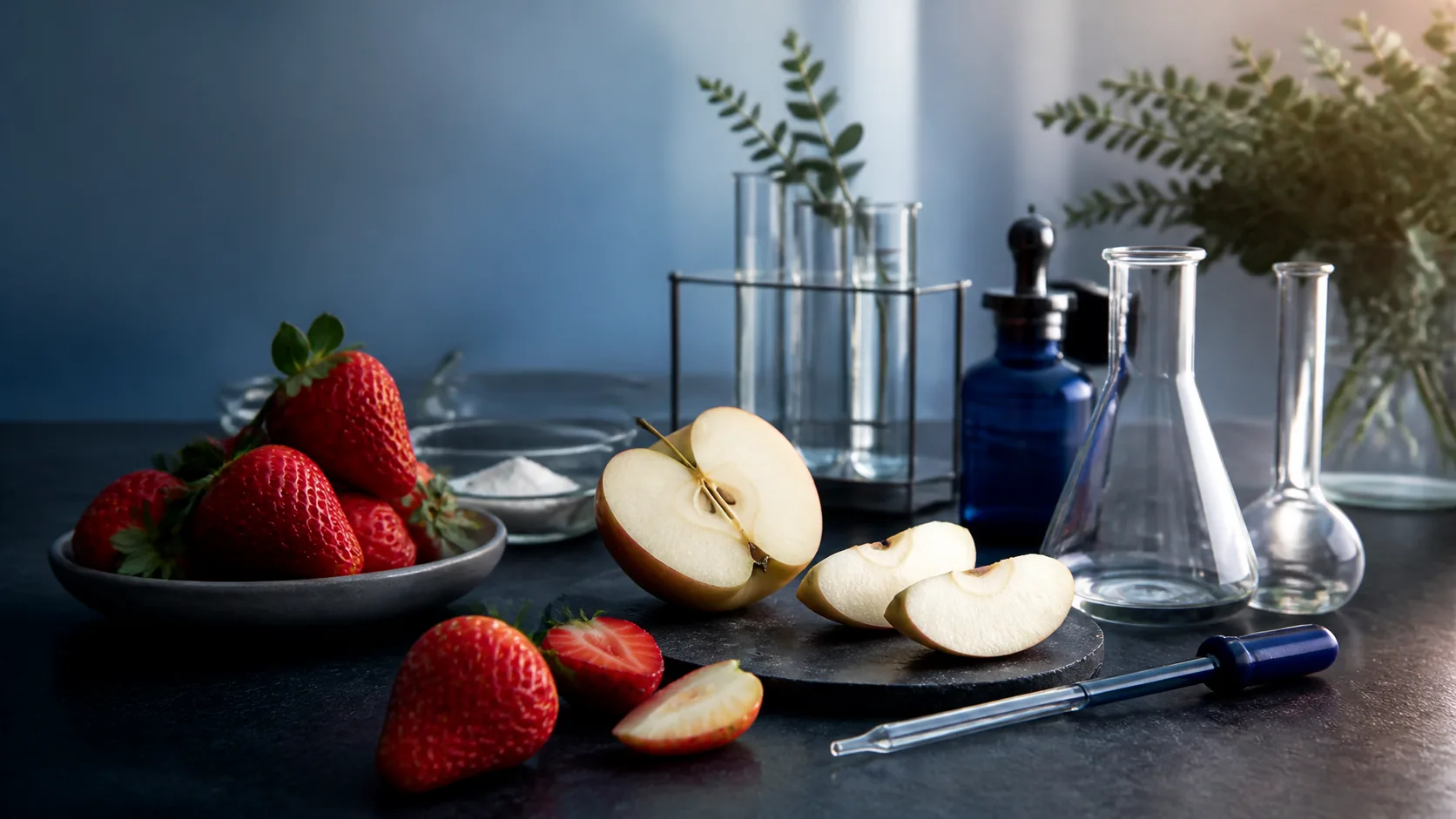
- Fisetin is a plant flavonoid, found in strawberries and apples, with senolytic activity in experiments.
- In mice, clearing senescent cells extended healthspan, and fisetin showed a similar effect.
- Human clinical trials are running, including at the Mayo Clinic, but there are no longevity results yet.
- What is being studied is intermittent “hit-and-run” dosing, not daily use.
Fisetin is a plant flavonoid found in strawberries and apples that acts as a senolytic: a compound that selectively kills senescent cells, the cells that stop dividing but stay alive and leak inflammatory signals into the tissue around them. In aged mice, fisetin reduced the number of senescent cells and extended lifespan, but in humans it is still in early clinical trials and no extension of human life has been demonstrated. Senolytics are one of the most promising directions in aging science because the idea is elegant: not to slow aging in general, but to remove specific cells that have quit dividing and are poisoning the tissue around them. Fisetin is the most accessible candidate in the class, so it is worth separating what is proven from what is still a hypothesis.
What senolytics and cellular senescence are
Cellular senescence is the state at the center of all this: senescent cells accumulate in tissue with age. They stop dividing but do not die, and they secrete a cocktail of inflammatory signals known as the senescence-associated secretory phenotype (SASP). That slow-burning process is part of age-related inflammation (inflammaging) and it speeds up biological aging in the surrounding tissue. Cells slide into that state by several routes, and one of the best studied is the gradual erosion of the chromosome caps described in Genetic age and telomeres.
Senolytics are compounds that force exactly those cells to die while leaving healthy cells alone. Fisetin is a natural flavonoid that has shown this activity; the same class includes the combination of dasatinib plus quercetin and several other compounds.
What the research on fisetin and senolytics shows
Evidence from animal models
Foundational work showed that genetically removing senescent cells in mice extends Healthspan (healthy life expectancy), pushes back age-related disease and improves organ function. The same result was then reproduced pharmacologically, with senolytics. In a 2018 study, fisetin reduced the number of senescent cells in old mice and increased both median and maximum lifespan, even when dosing started late in life.
Evidence in humans
Clinical trials are running, but they are still early-phase. The dasatinib plus quercetin combination has been tested in pulmonary fibrosis and in diabetic kidney disease, with signs of a lower senescent cell burden. Fisetin is being tested, at the Mayo Clinic among other centers, in age-related frailty and inflammation. There is no proven extension of human life, because the studies are not finished.
Senolytics also carry a conceptual risk that the trials are designed to check. Senescent cells are not always harmful: temporarily they take part in wound healing and tumor suppression. The aim is therefore not to burn them out completely, but to remove the excess that has built up with age. That is why researchers are so careful with doses and schedules, and why carrying impressive mouse results over to humans takes time and disciplined trials rather than enthusiasm from forums.
Fisetin doses and dosing schedules
The defining feature of senolytics is that they are not taken every day. They are given in short pulses: kill the senescent cells that have accumulated, then pause. Researchers call this the “hit-and-run” approach.
| Parameter | What is being studied | Comment |
|---|---|---|
| Schedule | Short courses (e.g. 2 consecutive days) | Periodic, not daily |
| Doses used in trials | High, for a short time | Far above dietary amounts |
| Bioavailability | Low for standard fisetin | Liposomal forms are being studied |
| Food sources | Strawberries, apples, persimmon | Doses are not comparable to supplements |
One thing is worth being clear about: “senolytic” doses are many times higher than anything you can get from berries. Eating strawberries is good for you, but it is not senolytic therapy.
What this means for the average person
Until the clinical trials are finished, the sensible attitude toward senolytics is that of an interested observer rather than a participant. The field really could change the medicine of aging, and that is exactly why it is worth waiting for data on which doses, which schedules and which patient groups get a benefit without harm.
There is also a level you can act on right now that requires no experiments at all: do not give senescent cells a friendly environment. Chronic age-related inflammation feeds their accumulation, while physical activity, normal sleep, weight control and an anti-inflammatory diet bring that inflammation down. Put another way, the best “senolytic” with proven benefit today is a way of living that slows cellular aging itself, rather than an attempt to clear its consequences with unproven doses of supplements. To see whether those habits are actually paying off, a blood-based estimate such as the PhenoAge Calculator — biological age from a blood test tracks the inflammatory and metabolic markers that shift with sleep, weight and activity.
If you are still considering taking part, look for registered clinical trials rather than the gray market. In a trial, dosing is supervised and safety is actually assessed.
It is worth being sober about why senolytics are so attractive to marketing. The promise to “remove old cells” sounds simple and vivid, and against that backdrop it is easy to sell high doses of ordinary flavonoids as therapy. The simplicity of the slogan is precisely what should make you cautious: real senolytic biology is complex, it depends on tissue, dose and timing, and it is being untangled in the clinic right now. Telling what is proven from what is being sold is a basic skill for anyone interested in longevity, and senolytics show that difference unusually clearly. Put simply, the concept deserves attention, and the specific commercial promises built on it deserve healthy skepticism and a wait for trial results.
Safety and contraindications
Fisetin as a dietary flavonoid is considered safe, and the short courses used in trials have generally been well tolerated. But high “senolytic” doses have not been studied enough, and long-term safety has not been established. Dasatinib, the drug in the other combination, is an anticancer agent with serious side effects and is used only under medical supervision. As with other flavonoids, interactions with medications through liver enzymes are possible.
Verdict: how well founded is taking fisetin
Senolytics are a genuinely new and promising approach, but in humans the work is still at the trial stage. Fisetin looks like the safest candidate in the class, yet the human evidence is not there yet.
| Criterion | Assessment |
|---|---|
| The concept (clearing senescent cells) | Strongly supported in animals |
| Fisetin in animals | Healthspan extension shown |
| Evidence in humans | Early trials, no longevity results |
| Safety of high doses | Not studied enough |
| Bottom line | Very promising but still experimental, too early to use outside trials |
The practical takeaway: this field is worth following as clinical results come in. Taking high doses of fisetin on your own, just in case, is premature, because the human evidence base is not there yet. Everything that does already have evidence behind it belongs to the unglamorous basics gathered under Longevity — the science of aging more slowly.
What are senolytics in plain language?
They are compounds that selectively destroy old cells that have stopped dividing and are poisoning tissue with inflammatory signals, without damaging healthy cells.
Is eating strawberries enough to get the effect?
No. The “senolytic” doses of fisetin used in studies are many times higher than anything you can get from berries. Strawberries are good for you, but they are not a therapy.
Why are senolytics taken in short courses rather than continuously?
That is the “hit-and-run” logic: clear the accumulated senescent cells with a short pulse and then pause, rather than suppressing something every day.
Is it proven that fisetin extends human life?
No. Healthspan extension has been shown in mice; human clinical trials are still under way.
Sources (4)
- Yousefzadeh et al. Fisetin as a senotherapeutic that extends healthspan. PubMed →
- Baker et al. Clearance of senescent cells delays aging. PubMed →
- Hickson et al. Senolytics (dasatinib+quercetin) in humans — early trials. PubMed →
- Kirkland & Tchkonia. Senolytic drugs: from discovery to translation. PubMed →
Disclaimer. This article is for information only and does not replace medical advice. Talk to a qualified clinician before changing anything about your health.