Spermidine and Longevity: The Autophagy Evidence
By Longevity Lab · Published: July 21, 2026
Based on peer-reviewed research — full source list at the end of this article. This is educational information, not medical advice.
- Spermidine is a natural polyamine and a potent inducer of autophagy, the cell’s own clean-up system.
- In animals it extends lifespan and protects the heart and neurons, and the effect is tied specifically to autophagy.
- In humans the data are observational: more spermidine in the diet, lower mortality.
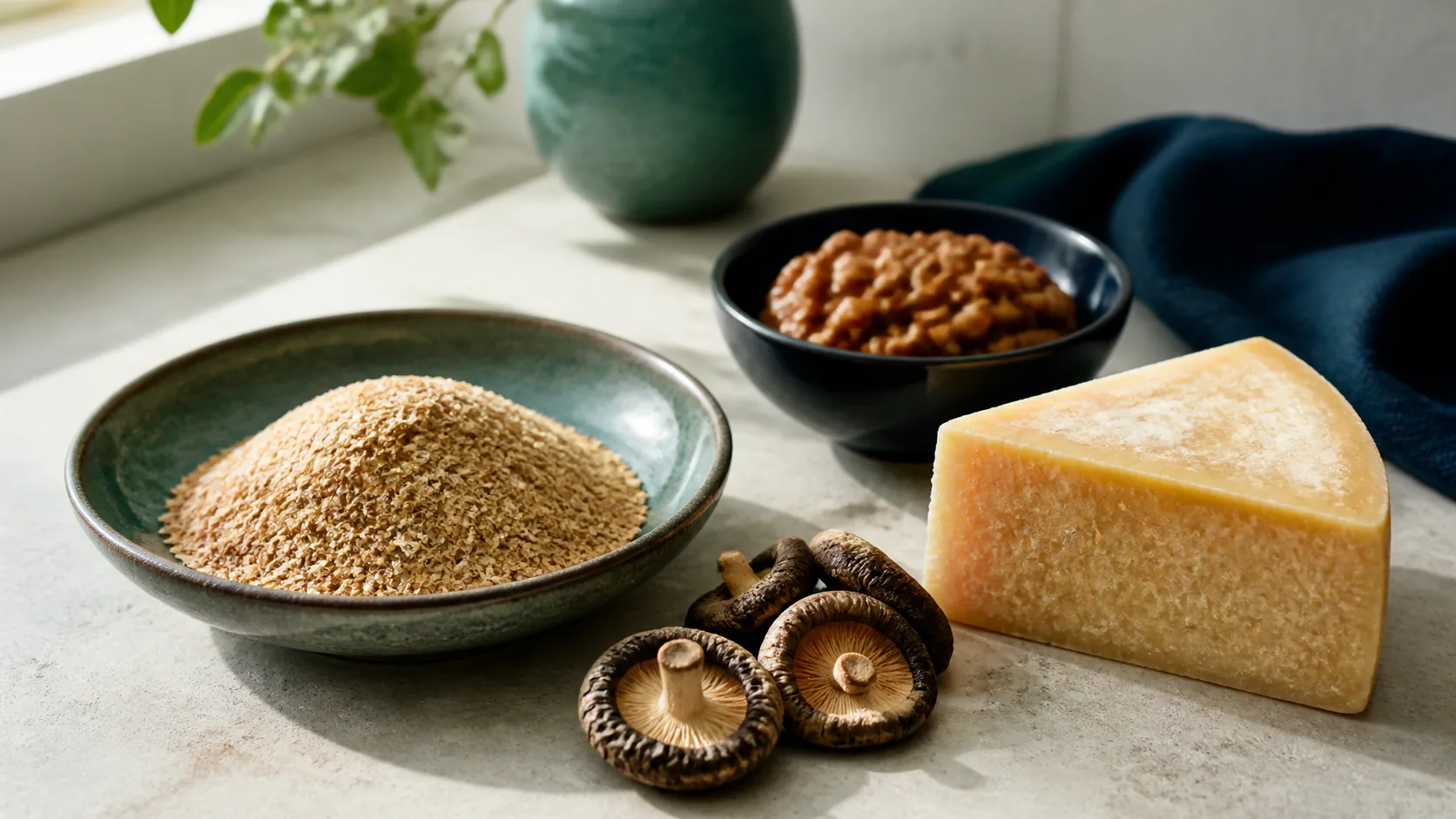
- Food sources: wheat germ, aged cheeses, soy, mushrooms, legumes.
- Supplements are being studied, but there is still no randomized evidence that they extend human life.
Spermidine is a natural polyamine that induces Autophagy, the process cells use to break down and recycle their own damaged proteins and organelles. In animals it extends lifespan and protects the heart and neurons; in humans the evidence is observational, with higher dietary spermidine intake associated with lower all-cause mortality and no randomized trial yet showing that supplements extend human life. What makes spermidine unusual is that it is not a synthetic drug: your body produces it and you already eat it every day, yet its ability to switch on autophagy is comparable to fasting. Here is what stands behind that claim, and how far it justifies buying a supplement.
What spermidine is and how it affects aging
Spermidine is a polyamine present in every living cell. Its level in tissues falls with age, and that decline coincides with the buildup of cellular debris. The defining property of spermidine is the induction of autophagy: the cell steps up the dismantling of damaged proteins and organelles and recycles the parts.
Autophagy is one of the central mechanisms linking caloric restriction and intermittent fasting to slower aging. Spermidine switches it on without any restriction of food, which is why it is sometimes called a fasting mimetic. Whether the fasting half of that comparison holds up in people, and which eating protocols actually have human data behind them, is examined in Intermittent Fasting and Aging, Minus the Hype.
Beyond autophagy, spermidine has other effects: it stabilizes DNA and chromatin, supports the function of the Mitochondria and lowers systemic inflammation. But autophagy is considered the main route. When researchers blocked it in animals, the lifespan-extending effect of spermidine disappeared. That is a rare case in which the mechanism of a geroprotector is not merely proposed but demonstrated by switching it off.
What the research on spermidine shows
Evidence from animal models
Spermidine supplementation extended lifespan in yeast, worms, flies and mice. In mice, cardiac function improved (age-related hypertrophy and myocardial stiffness fell), neurons were protected and memory improved. Crucially, the protective effect vanished when autophagy was genetically disabled in the animals, which points directly at the mechanism.
Evidence in humans
There are no direct longevity trials in people, but there are large observational cohorts. In population studies such as the Bruneck cohort, higher dietary spermidine intake was associated with lower all-cause mortality, and the gap between the top and bottom thirds of intake was comparable to several years of life. Small intervention studies reported improved memory in older adults at risk of Dementia. That is encouraging, but observational data do not prove causation. The dementia risk those trials were aiming at is itself only partly fixed, and Cognitive aging: the brain, memory, and dementia risk lays out which of its drivers you can still change.
The limits of the method matter here. People who eat plenty of spermidine-rich foods (whole grains, legumes, fermented cheeses, vegetables) tend to eat better overall. Part of the association may therefore reflect the surrounding lifestyle rather than spermidine itself. Observational studies can adjust for such factors only partly, and the final answer would have to come from randomized trials, which do not yet exist for lifespan.
Even so, the combination of strong animal data, a confirmed mechanism and consistent human observations puts spermidine among the most biologically grounded candidates, in contrast to compounds that offer an elegant theory and no data.
Spermidine food sources and doses
Spermidine is easier to get from food than most geroprotectors.
| Source | Spermidine content | Notes |
|---|---|---|
| Wheat germ | Very high | The base of most supplements |
| Aged cheeses | High | Cheddar and other mature varieties |
| Soy, natto, tempeh | High | Fermented forms contain more |
| Mushrooms, legumes | Moderate | An affordable everyday source |
Supplement studies used roughly 1–6 mg of spermidine per day, usually from wheat germ extract. The dietary route is simply adding the foods above to your meals; it is safer and fits inside a general Mediterranean pattern of eating.
How to get spermidine in practice
Spermidine is a rare geroprotector with a simple and safe strategy: food first, supplements second and only if you want them. A daily Mediterranean-style plate of whole grains, legumes, vegetables and a little mature cheese already delivers a meaningful amount of spermidine without a single capsule.
Fermented foods push the total higher. Natto, tempeh and aged cheeses carry more polyamines because the bacteria that make them produce polyamines as well. That is easy to combine with looking after your gut microbiome: the same set of foods serves both goals at once.
Wheat germ extract supplements make sense as an addition, for example if your diet is short on the foods listed above. They do not cancel the basic principle: spermidine works alongside a healthy diet and daily routine, not instead of them.
Another advantage of the food route is that it does not ask you to guess the right dose. Supplement trials used a fairly narrow range, whereas food delivers spermidine together with fiber, polyphenols and other compounds that act synergistically. So for most people the question is not how many milligrams of spermidine to take, but how rich the overall diet is in whole plant and fermented foods, and the answer to that is useful far beyond spermidine alone. If you would rather track a number than a habit, the PhenoAge Calculator — biological age from a blood test turns a routine blood panel into a biological-age estimate you can re-run after a year of eating this way.
Safety and cautions
Spermidine from food is safe; we have been eating it all our lives. Supplements at the doses studied were well tolerated, and short trials recorded no serious side effects. Long-term safety at high doses has not been established. Theoretical caution applies in cancer: polyamines take part in cell division, so during active cancer any decision about supplements should be made only with your doctor.
Verdict: how well justified is taking spermidine
Spermidine is one of the mildest and most biologically sensible geroprotectors: a clear mechanism, good animal data and supportive observations in humans.
| Criterion | Assessment |
|---|---|
| Animal evidence | Strong, with a confirmed mechanism |
| Human evidence | Observational plus small intervention trials |
| Mechanism | Clear — induction of autophagy |
| Safety | High at dietary doses |
| Bottom line | Reasonable to get from food; supplements optional, the dietary route is preferable |
The practical conclusion: start with spermidine-rich foods inside a healthy diet. Supplements make sense as an addition, but they do not replace the way you live.
Is spermidine a steroid or a hormone?
No. It is a natural polyamine found in every cell and in ordinary food, and it has nothing to do with hormones.
Is a supplement better than food?
The dietary route is preferable: it is safe, and the observational data on lower mortality come specifically from spermidine eaten as food.
How quickly does the effect show up?
Autophagy switches on quickly, but the effect on health is a long process and studies measure it over years. Do not expect fast, noticeable results.
Who should be careful?
If you have active cancer or are pregnant, make any decision about supplements only with your doctor.
Sources (4)
Disclaimer. This article is for information only and does not replace medical advice. Talk to a qualified clinician before changing anything about your health.