The Mediterranean Diet and Longevity: The Evidence
By Longevity Lab · Published: July 21, 2026
Based on peer-reviewed research — full source list at the end of this article. This is educational information, not medical advice.
- The Mediterranean diet is the most thoroughly studied eating pattern for longevity and heart health.
- In the large PREDIMED randomized controlled trial, it lowered the risk of major cardiovascular events by roughly a third.
- It is not a “diet” in the restrictive sense but a sustainable eating pattern: vegetables, legumes, whole grains, olive oil, fish, nuts.
- The benefit comes from the overall pattern and from replacing ultra-processed food, not from one superfood.
- It suits most people and adapts easily to local ingredients.
What the Mediterranean diet is
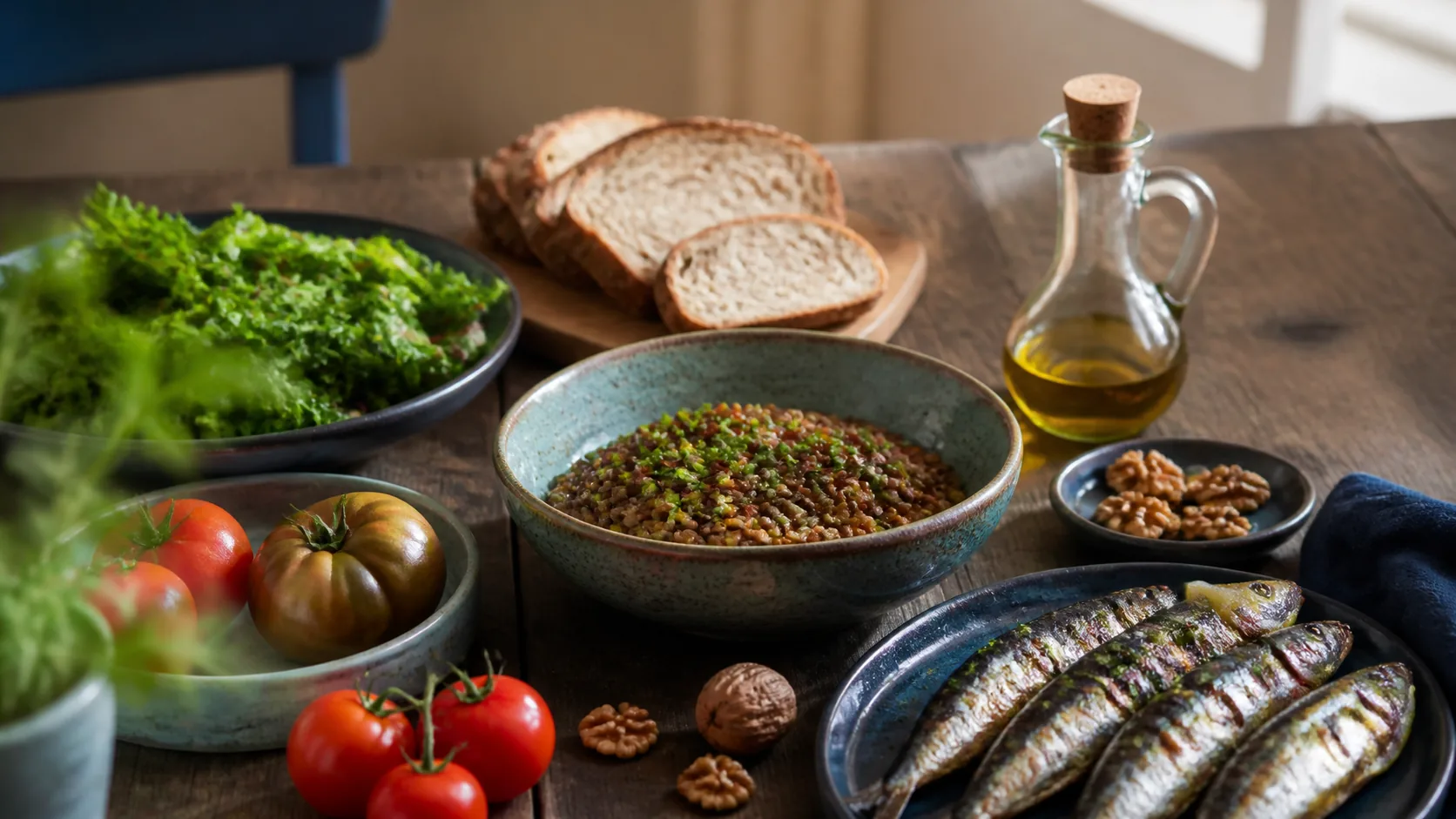
The Mediterranean diet is the most thoroughly studied eating pattern for longevity and heart health, and it is one of the few tested in a randomized controlled trial (RCT) rather than by observation alone. In practice it is built on plant foods (vegetables, fruit, legumes, nuts, whole grains), with olive oil as the main source of fat, regular fish and seafood, moderate amounts of dairy and poultry, and very little red meat or sweets. It describes how people ate around the Mediterranean in the mid-20th century. That makes it a flexible template rather than a set of strict rules, which is why people manage to keep it for years. Two of the world’s longest-lived communities, on Sardinia and Ikaria, sit on that same coastline and eat much the same way, as described in Blue Zones and the Lessons of a Long Life.
What the studies show
The Mediterranean diet is a rare case where the benefit was tested not only by observation but by a randomized trial. In PREDIMED, a trial of almost 7,500 adults at high cardiovascular risk, the diet supplemented with olive oil or nuts lowered the rate of MACE — major adverse cardiovascular events (heart attack, stroke, death from vascular causes) by about 30% compared with the control group. What a relative reduction like that is worth to any one person depends on the absolute risk they start from, which is what a Heart Age QRISK estimate expresses as a 10-year probability of heart attack or stroke.
Observational studies associate closer adherence to this pattern with lower all-cause mortality and lower risk of Type 2 diabetes, some cancers, and cognitive decline. The association reproduces consistently across different countries.
Why it works
The benefit appears to come from the whole pattern rather than from any single food: plenty of fiber and polyphenols, better fats in place of saturated fat and trans fats, less added sugar and less ultra-processed food. Replacement matters as much as addition, because olive oil and legumes crowd out processed meat and pastries. Indirectly, the pattern also acts gently on protein glycation and on inflammation. The same shifts show up in the measures used to diagnose Metabolic syndrome — the hidden pandemic of the 21st century: waist circumference, blood pressure, glucose, triglycerides and HDL.
How to eat this way with everyday groceries
You do not need imported or specialty foods. The principle is what counts:
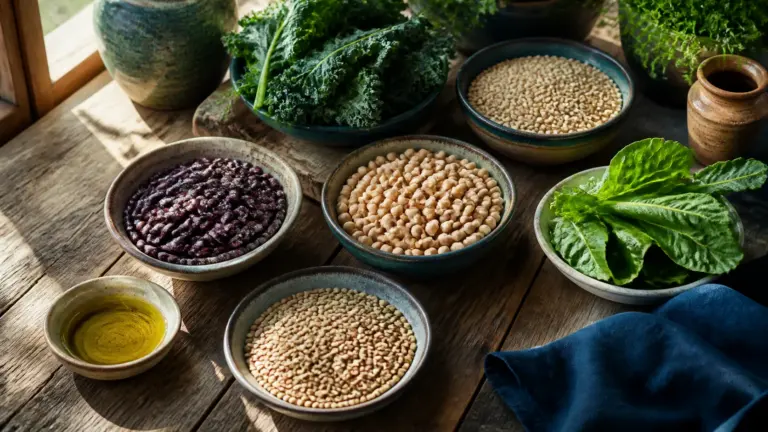
- vegetables and greens at every meal, legumes several times a week;
- olive oil as the default fat (an unrefined sunflower oil also works for cooking);
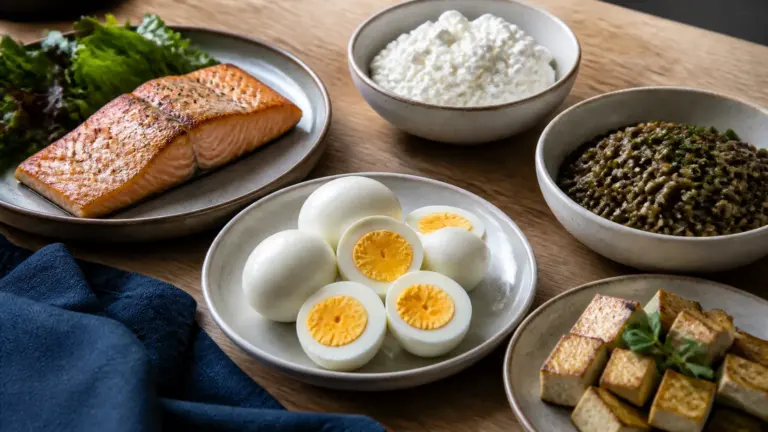
- fish 2–3 times a week (cheap options count: herring, mackerel, pollock);
- whole grains instead of white bread and quick-cooking cereals;
- nuts instead of packaged snacks; red meat and sweets kept to a minimum.
Getting enough protein matters too, especially as you age. There is more on that in how much protein you need after 40.
Common questions
Is it expensive?
Not necessarily. Legumes, seasonal vegetables, affordable fish and grains are all cheap. What makes the diet expensive is the delicacies, and those are easy to skip.
Can you lose weight on the Mediterranean diet?
It is not built around counting calories, but the fiber and whole foods make it easier to eat moderately. To lose weight you still need a small calorie deficit.
Does the olive oil have to be extra virgin?
Extra virgin is preferable because of its polyphenols, but the overall eating pattern matters more than any single product.
Sources
Sources (3)
- Estruch R, et al. Primary prevention of cardiovascular disease with a Mediterranean diet (PREDIMED). NEJM. 2018;378:e34. PubMed →
- Trichopoulou A, et al. Adherence to a Mediterranean diet and survival in a Greek population. NEJM. 2003;348:2599–2608. PubMed →
- Martínez-González MA, et al. The Mediterranean diet and cardiovascular health — a critical review. Circ Res. 2019;124:779–798. PubMed →
Disclaimer. This article is for information only and does not replace medical advice. Talk to a qualified clinician before changing anything about your health.