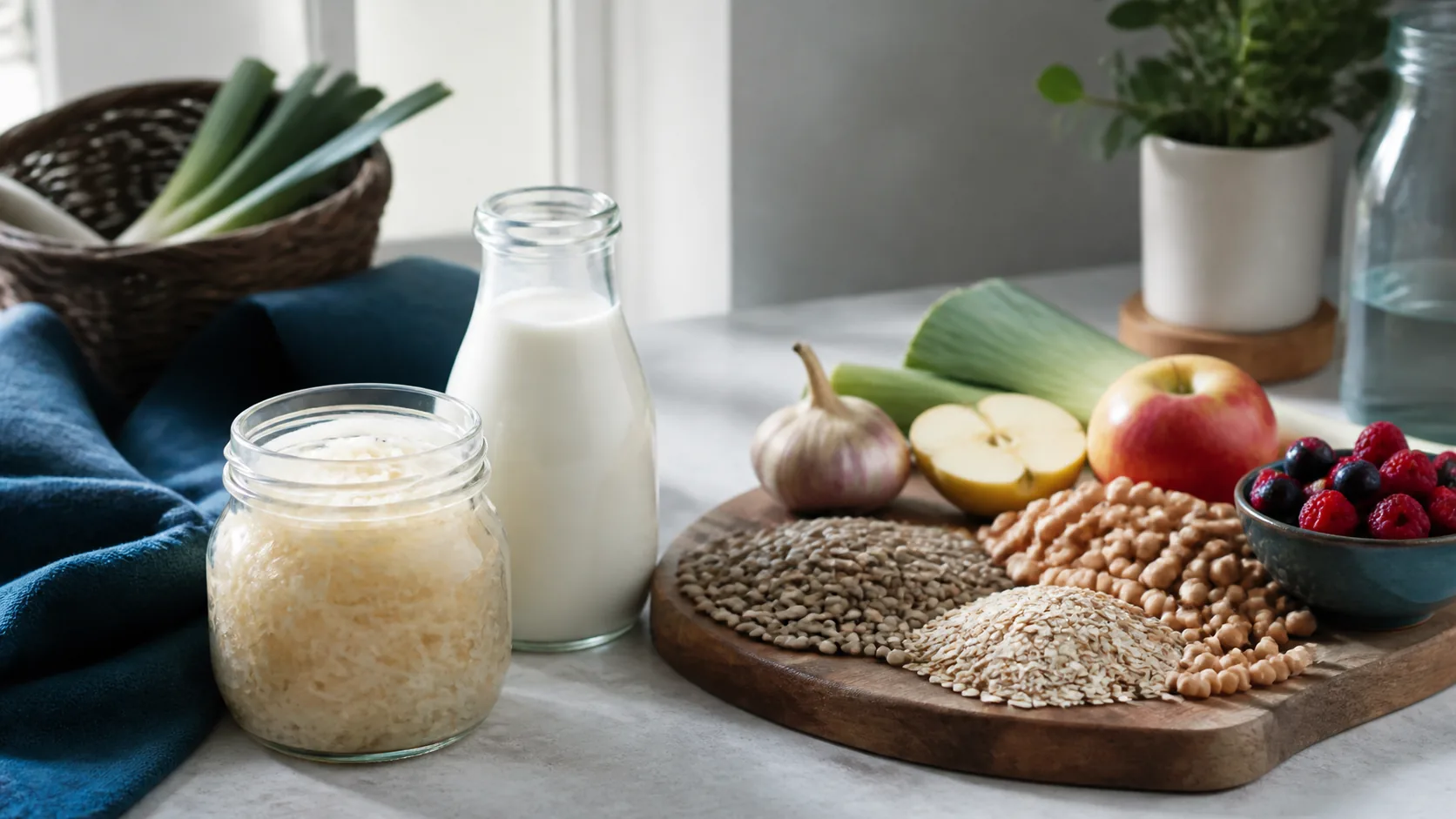
How to Support Gut Health and Your Microbiome
By Longevity Lab · Published: July 21, 2026
Based on peer-reviewed research — full source list at the end of this article. This is educational information, not medical advice.
- The gut microbiome influences immunity, inflammation, metabolism, and even mood.
- The main lever for a healthy microbiome is a wide variety of plant fiber, not a probiotic in a jar.
- Fermented foods (yogurt, kefir, sauerkraut) support beneficial bacteria.
- Sugar, ultra-processed food, unnecessary antibiotics, and chronic stress all deplete the microbiome.
- “Detox cleanses” are not something the gut needs: it clears itself when it is fed properly.
To support gut health, feed your microbiome a wide variety of plant fiber, aiming for about 25–30 g of fiber a day from as many different plants as possible, add a small daily portion of fermented food, and cut back on ultra-processed food and added sugar. Trillions of bacteria live in the gut, and their composition decides far more than digestion: the Gut microbiome works like a separate organ that shapes immunity, inflammation, and metabolism. The good news is that food changes it, and doing that is simpler than it sounds. This guide lays out a practical system for looking after your gut over a long life.
Why your gut matters for longevity
The microbiome does work your own cells cannot: it ferments fiber, produces vitamins and short-chain fatty acids, and trains the immune system. About 70% of immune cells sit in the gut wall, so the state of the microbiome directly shapes how the body answers an infection and how much systemic inflammation it carries. The gut is the largest immune organ in the body, and the microbiome is its coach, teaching the immune system to tell the harmless from the dangerous and not to overreact.
Chronic inflammation is one of the core mechanisms of aging, and a leaky, depleted microbiome feeds it. Through the gut–brain axis the microbiome also influences mood and cognition, a link covered in the guide on eating for brain health. That axis runs in both directions, so a heavy, sustained stress load reshapes the gut in turn, and a validated Stress Level Test (PSS-10) is a quick way to see how much of it you are actually carrying. Looking after the gut is therefore an investment in immunity, metabolism, and the brain at the same time.
Microbiome diversity declines naturally with age, and that decline is associated with weaker immunity and rising inflammation. Yet people who reach very old age often carry a surprisingly rich, “young” microbiome, largely thanks to a plant-heavy diet. That is one more argument that the makeup of your gut flora is mostly in your hands.
The microbiome also affects how you absorb food and medication, and even how hungry you feel. Bacteria take part in producing the molecules that signal fullness, and they metabolize bile acids, which in turn influence cholesterol levels. A healthy microbiome is not a vague promise of “good digestion”: it is a factor wired into metabolism, immunity, and appetite at once, so investing in it pays off on several fronts. Where that metabolic side currently stands is measurable rather than abstract: the assessment for Metabolic syndrome — the hidden pandemic of the 21st century reads it off five everyday markers, including waist circumference, blood pressure, and glucose.
What a healthy microbiome looks like
There is no single ideal bacterial composition, but healthy microbiomes share one trait: diversity. The richer the range of species, the more resilient the system, because different bacteria do different jobs and cover for one another.
The main food for beneficial bacteria is fiber, the plant material you cannot digest yourself. Microbes turn it into short-chain fatty acids, butyrate in particular, which feed the cells lining the gut, strengthen the gut barrier, and lower inflammation. A depleted microbiome, starved of fiber, does the opposite: it starts grazing on the gut’s own mucus layer and weakens the barrier.
Signs of an unhealthy gut
The gut signals trouble through more than digestion. A depleted microbiome and low-grade inflammation can show up broadly, and knowing the signs helps you look at your diet in time.
- Digestion. Regular bloating, unpredictable stools, discomfort after meals.
- Immunity. Frequent colds, lingering low-grade inflammation, flaring allergies.
- How you feel. Chronic fatigue, brain fog, mood swings.
- Sugar cravings. Some bacteria effectively demand to be fed fast carbohydrates.
Do not self-diagnose. Persistent or alarming symptoms, such as pain, blood in the stool, or sudden weight loss, need a doctor rather than a different yogurt. But when the problem is mild background discomfort plus a monotonous diet, food is almost always the place to start: it is safe, and it often solves the problem on its own.
Fiber and plant variety: the main lever
If you remember only one rule for gut health, make it this one: eat more different plants. Microbiome research shows that the variety of plant foods, rather than the amount of any single type of fiber, is what correlates best with a rich gut flora.
| Food group | What it gives the microbiome | Examples |
|---|---|---|
| Vegetables and greens | Fiber, polyphenols | Colorful vegetables, leafy greens |
| Legumes | Resistant starch, fiber | Lentils, chickpeas, beans |
| Whole grains | Prebiotic fibers | Oats, barley, whole rye |
| Nuts and seeds | Fiber, healthy fats | Nuts, flaxseed, chia |
| Fruit and berries | Polyphenols, pectin | Berries, apples |
The practical benchmark researchers use is 30 different plant foods a week, counting vegetables, fruit, legumes, grains, nuts, and spices. That sounds like a lot, but herbs, spices, and assorted grains add up fast. For the mechanics of fiber itself, see the article on fiber and the microbiome.
Why variety rather than simply “more fiber”? Because different fibers feed different bacteria. Oats feed one set of species, legumes another, onions and garlic a third. A monotonous diet, even one heavy in a single type of fiber, supports only a narrow circle of microbes. The range of colors and species on your plate is not about looks, then. It is about feeding as many useful bacteria as possible. The simple version of the rule is to eat the rainbow: the more plant colors in a day, the wider the mix of fibers and polyphenols arriving in your colon.
Fermented foods and probiotics
After fiber, fermented foods are the second most useful tool. They deliver live beneficial bacteria along with the compounds those bacteria produce. In research, a diet with fermented foods increased microbiome diversity and lowered markers of inflammation.
| Food | What makes it work | Tip |
|---|---|---|
| Yogurt and kefir | Live cultures | Choose versions with no added sugar |
| Sauerkraut | Fiber plus bacteria | Unpasteurized, still “live” |
| Kimchi | Fermented vegetables | Also a source of polyphenols |
| Miso, natto, tempeh | Fermented soy | Natto is also rich in vitamin K2 |
Probiotics in capsules can help in specific situations, such as after a course of antibiotics, but they do not replace food. Their effects are strain-specific and often temporary: without fiber to eat, the useful bacteria do not settle in. An expensive jar of probiotics on top of a fiber-poor diet is close to money wasted.
Prebiotics deserve a separate mention. They are not bacteria but the food for them: particular fibers from onion, garlic, leek, asparagus, banana, and chicory. Pairing prebiotics (the food) with probiotics (the bacteria themselves) makes more sense than betting on one alone. Even here food comes first, because a varied plant-based diet naturally contains both, so in most cases separate supplements are unnecessary.
What harms the microbiome
Damaging your gut flora is as easy as supporting it. These are the main factors that deplete the microbiome:
- Ultra-processed food and sugar. They feed the wrong bacteria and crowd fiber out of the diet.
- A monotonous diet. Few different plants means few different bacteria.
- Unnecessary antibiotics. They are essential when indicated, but uncontrolled use mows down the beneficial flora too.
- Chronic stress and short sleep. Both worsen microbiome composition through the gut–brain axis.
- Too much alcohol. It damages the gut barrier and unbalances the flora.
Myths about gut health
The microbiome is surrounded by marketing, and some of the popular ideas do not survive scrutiny.
“You need a detox cleanse.” A healthy gut does not need cleansing and can be harmed by it, because it clears itself. “Toxins” in this sense are a marketing story, not a medical concept.
“The more expensive the probiotic, the better.” Price does not guarantee an effect; the effect depends on the specific strain and the specific problem. For most people, food matters more than supplements.
“Gluten and lactose are bad for everyone.” Food intolerance is a real diagnosis, but without one there is no reason to cut whole food groups. Doing so makes the diet, and the microbiome, poorer.
How to start looking after your gut
Rebuilding your diet around the gut is easier than it sounds if you move gradually. Start with a few simple steps and add the rest as they become habit.
- Add legumes — at least 3–4 times a week (lentils, chickpeas, beans).
- Diversify your plants — aim to hit as many different species as you can over a week.
- Bring in fermented food — a small portion of yogurt, kefir, or sauerkraut every day.
- Cut ultra-processed food and sugar — they are the main feeders of the wrong flora.
- Change your diet smoothly — a sudden jump in fiber causes bloating, so increase it step by step.
In the first weeks of eating more fiber, bloating and gas are common, and that is the microbiome adapting. If you build fiber up gradually and drink enough water, the discomfort passes within a couple of weeks, and steadier digestion takes its place.
Consistency matters too, because the microbiome likes stability and variety at the same time. Sharp swings, a strict diet one week and holiday excess the next, rock the flora harder than a calm but varied everyday diet does. The best strategy for the gut is not one perfect week a month but sustainable daily plant variety that becomes normal rather than heroic. That is the pattern behind the everyday diets of the long-lived communities described in Blue Zones and the Lessons of a Long Life, where beans, greens, and whole grains are ordinary food rather than a program.
Finally, do not forget water and movement. Fiber needs fluid to work gently, and physical activity stimulates gut motility. These two get overlooked when the focus falls only on food, and without them even a fiber-rich diet can deliver discomfort instead of benefit. The gut is part of the body, and a generally healthy lifestyle supports it just as diet does.
Do you need to take probiotics every day?
For most healthy people, no. A diet built on fiber and fermented foods matters more. Probiotics are useful in targeted situations, such as after a course of antibiotics.
How quickly does the microbiome change?
The first shifts in composition appear within a few days of a diet change, but stable diversity is built over months of a consistently plant-rich diet.
Do detoxes and gut cleanses help?
No. A healthy gut cleans itself. Detox programs have no evidence base and can do harm by disrupting the flora and the gut barrier.
How much fiber do you need?
The benchmark is about 25–30 g a day, but the variety of sources matters more than the number. Build fiber up gradually.
Where do you start if your diet is poor?
Add legumes a few times a week and one portion of a fermented food a day, then widen the range of vegetables from there.
Sources (4)
Disclaimer. This article is for information only and does not replace medical advice. Talk to a qualified clinician before changing anything about your health.