Grip Strength as a Marker of Longevity
By Longevity Lab · Published: July 21, 2026
Based on peer-reviewed research — full source list at the end of this article. This is educational information, not medical advice.
- Grip strength is a simple and surprisingly accurate predictor of health and lifespan.
- In large studies, a weaker grip is associated with a higher risk of death and of cardiovascular disease.
- Grip mirrors whole-body muscle strength and general physical condition, not just the strength of your hands.
- You can measure it with a hand dynamometer; the useful reference point is your own trend over time.
- To improve it, train the strength of your whole body with regular strength training, not just your hands.
Grip strength is one of the most accurate low-cost markers of longevity: in large international cohorts, a weaker hand squeeze is associated with a higher risk of death from all causes and from Cardiovascular disease (CVD), and it tracked that risk more closely than systolic blood pressure did. It works because the force your hand can produce reflects the strength and condition of your whole body, not just your fingers. Below: why grip is linked to longevity, what it actually measures, how to test it, and how to raise it.
Why grip strength predicts health
In the large international Prospective Urban Rural Epidemiology (PURE) study, which covered dozens of countries, grip strength turned out to be a strong predictor of mortality: every drop in grip force was associated with a marked rise in the risk of death from all causes and from cardiovascular disease. Grip predicted that risk even more accurately than systolic blood pressure. Other large projects confirmed the finding, including analyses of data on hundreds of thousands of participants.
The association has to be read correctly. A weak grip does not kill anyone by itself. It reflects the overall state of the body: Skeletal muscle mass (SMM), nutrition, undiagnosed disease, and the degree of frailty. In practice it is a cheap, fast, integrative measure that picks up risk earlier than many lab tests do. The same logic sits behind composite scores such as Fitness age: the age of your physical fitness, which reads endurance, strength and balance together instead of judging any single number on its own.
What grip strength actually reflects
Hand strength is closely tied to whole-body strength and to several things that matter for longevity:
- muscle mass and strength overall — grip correlates well with leg and trunk strength;
- sarcopenia — the age-related loss of muscle, one of the key processes of aging (see strength training against sarcopenia);
- functional independence — getting out of a chair, carrying bags, holding your balance, all of which depend on Neuromotor function (neuromuscular control);
- general health — weakness often travels with hidden chronic disease.
How to measure grip strength
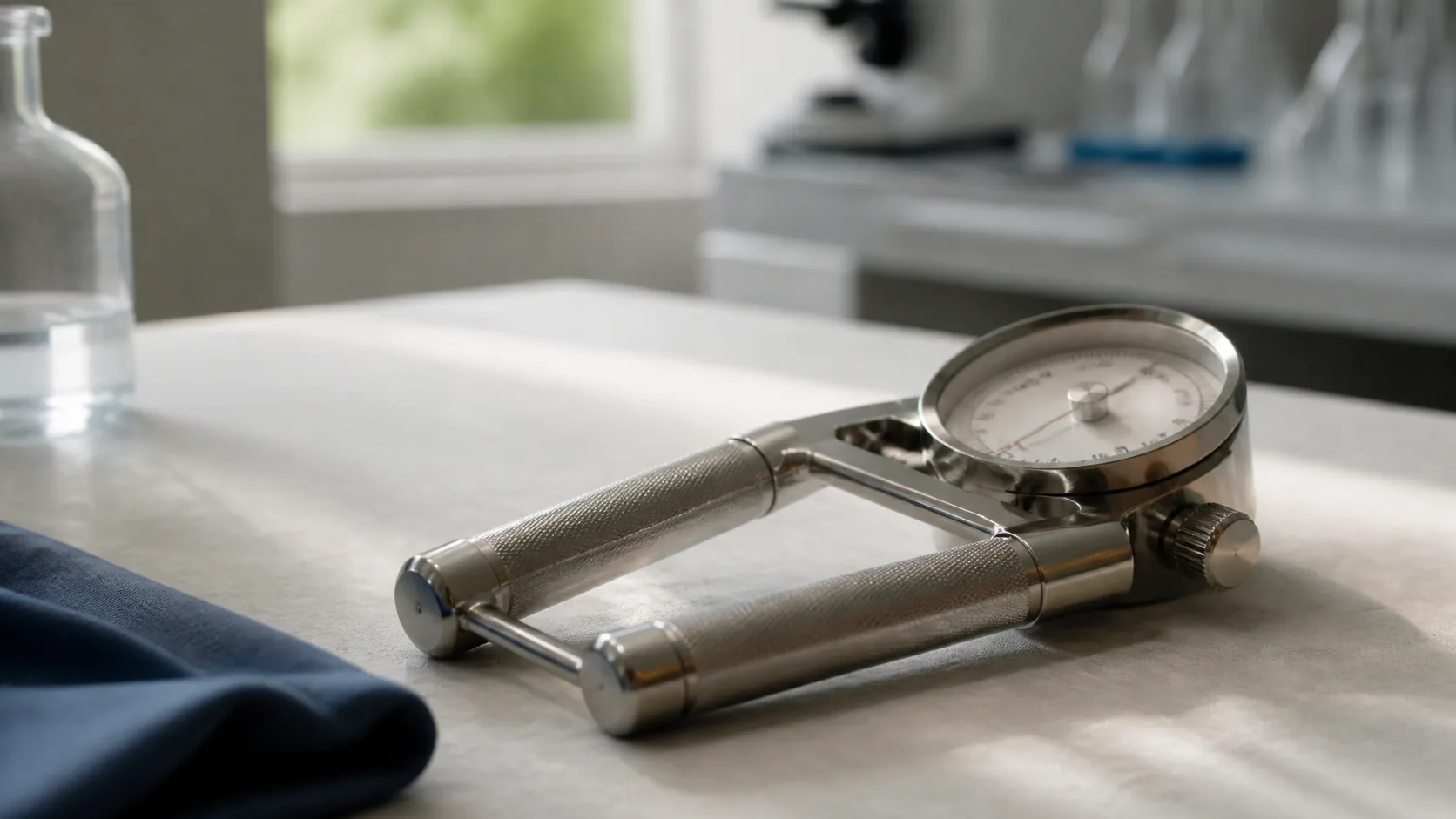
The most accurate way to measure grip is with a hand dynamometer, an inexpensive device you squeeze as hard as you can. Rough reference ranges exist by sex and age, but for most people the trend is more useful than the table: test yourself every few months the same way and watch whether the number is going up or down. A steady loss of strength over time is the warning sign. To see what sits behind that number, a Body composition assessment estimates fat-free mass and the muscle indices that your grip is standing in for.
How to improve grip strength and whole-body strength
The main mistake is training only the hands with a gripper. Grip matters as an indicator, so what you need to improve is the strength of the whole body:
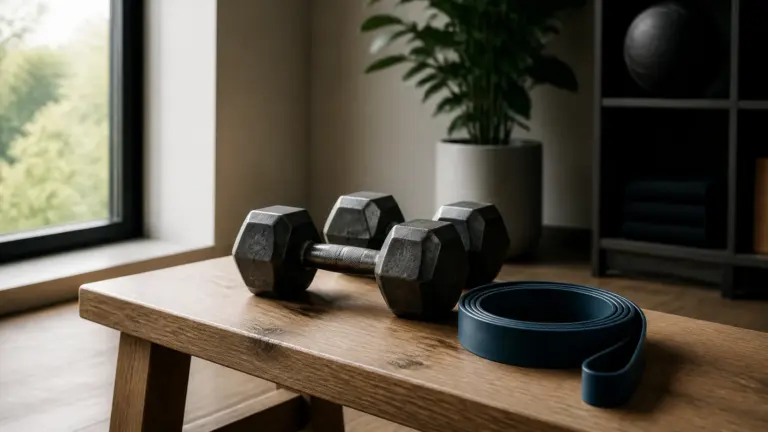
- Strength training 2–3 times a week for the large muscle groups is the foundation; grip comes up together with overall strength.
- Exercises that load the grip naturally — rows and pulls, carrying heavy loads (the farmer’s walk, for example), pull-ups or dead hangs.
- Enough protein — roughly 1.2–1.6 g per kg of body weight (see protein after 40).
- A hand gripper on its own does no harm, but it is an addition to strength training, not a replacement for it.
For the other accessible ways to measure aging, see our article on blood tests and biological age. If you already have recent results in hand, the PhenoAge Calculator — biological age from a blood test turns nine of those markers into a single biological-age figure you can track alongside your grip.
Frequently asked questions
Is it true that grip strength predicts lifespan?
In large studies, a weaker grip is associated with a higher risk of death and of heart disease — sometimes more accurately than blood pressure. But it is a marker of your overall condition, not a direct cause.
Do I need to train my grip with a hand gripper?
A gripper is useful as an addition, but whole-body strength is what counts. Build that with strength training and your grip will come up with it.
How do I measure grip strength at home?
A hand dynamometer is the most accurate option. A single number matters less than the trend: test the same way every few months and follow the direction.
What should I do if my grip is getting weaker?
A steady loss of strength is a reason to add strength training, check your protein intake, and discuss your overall condition with a doctor.
Sources
Sources (3)
- Leong DP, et al. Prognostic value of grip strength (PURE study). Lancet. 2015;386:266–273. PubMed →
- Celis-Morales CA, et al. Grip strength and mortality (UK Biobank). BMJ. 2018;361:k1651. PubMed →
- Bohannon RW. Grip strength: an indispensable biomarker for older adults. Clin Interv Aging. 2019;14:1681–1691. PubMed →
Disclaimer. This article is for information only and does not replace medical advice. Talk to a qualified clinician before changing anything about your health.