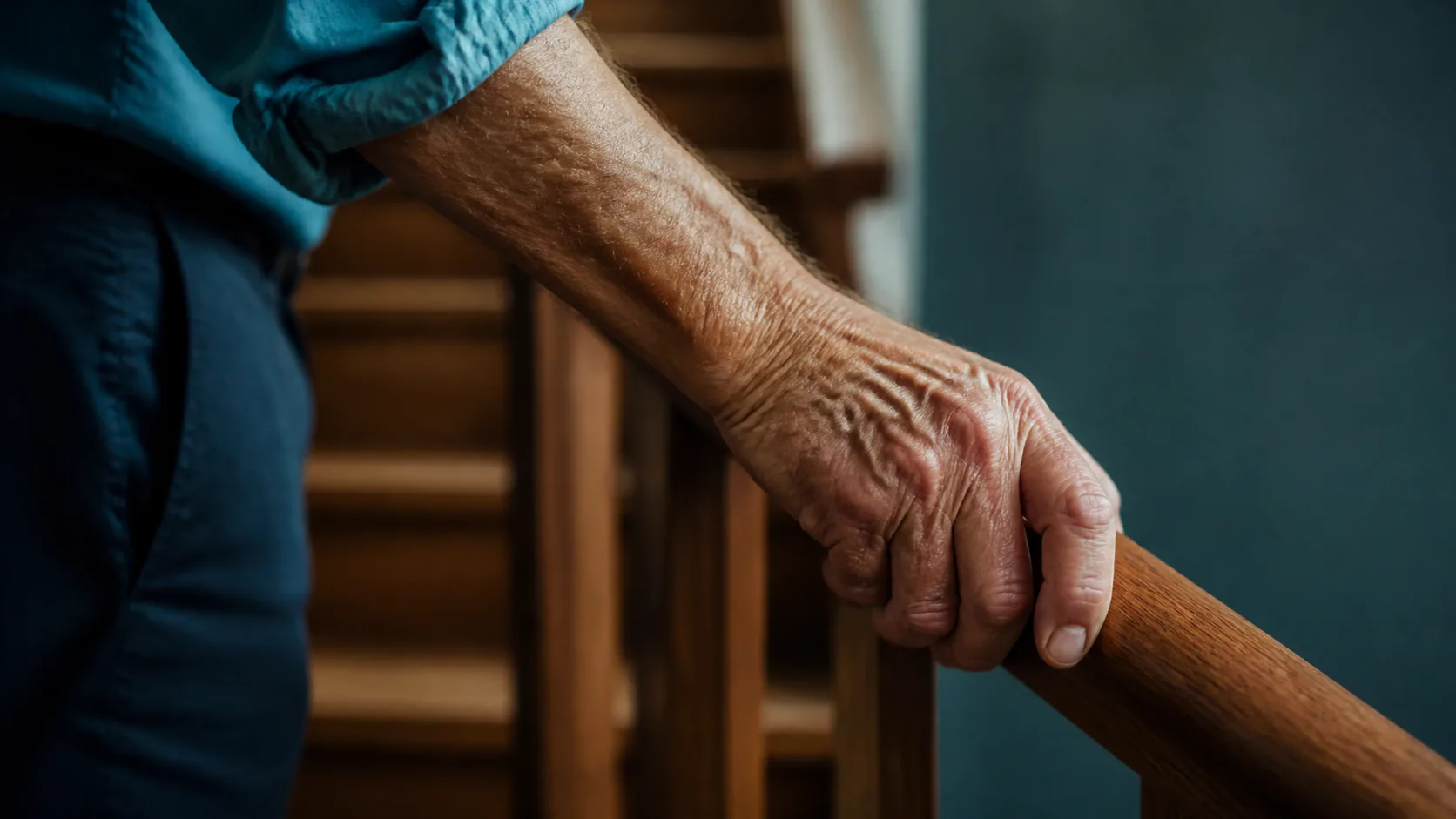
Sarcopenia
Sarcopenia is the progressive, age-related loss of skeletal muscle mass and muscle strength, severe enough to reduce what a person can physically do. It is a clinical condition in its own right, not an unavoidable part of getting older. Strength falls faster than muscle size, which is why diagnostic frameworks test strength first and only then measure muscle tissue. Commonly cited estimates put the loss at roughly 3-8 percent of muscle mass per decade from around age 30, accelerating after 60. The rate varies enormously, and weeks of illness or bed rest can compress years of it into one hospital stay.
What it measures
Sarcopenia is not one lab value but a diagnosis assembled from three kinds of measurement.
- Strength. A handgrip dynamometer, squeezed as hard as possible with the elbow at the side; a timed chair-stand test is used when grip cannot be measured.
- Quantity. DXA, bioelectrical impedance, CT or MRI estimate appendicular Skeletal muscle mass (SMM) — the muscle in the arms and legs. Because a taller person carries more of it, the kilogram figure is divided by height squared to give SMI — Skeletal Muscle Index, which the cut-offs are written against.
- Physical performance. Usual walking speed, a short physical performance battery, or a timed up-and-go.
Low strength raises the suspicion. Low muscle quantity confirms it. Poor performance marks it as severe.
Typical values
Cut-offs are consensus thresholds, not biological boundaries, and they differ by working group, sex and device. Below are the European working-group values most often quoted in Europe and North America; Asian criteria set several lower, because average body size differs.
| Measure | How it is taken | Result considered low |
|---|---|---|
| Grip strength | Handheld dynamometer, best attempt | Under 27 kg (men), under 16 kg (women) |
| Chair-stand test | Five rises from a chair, arms folded | More than 15 seconds |
| Muscle mass index | Appendicular muscle mass by DXA or bioimpedance, per height squared | Under 7.0 kg/m² (men), under 5.5 kg/m² (women) |
| Gait speed | Usual walking pace, measured course | 0.8 m/s or slower |
Why it matters for longevity
In large cohort studies, low muscle strength is associated with higher all-cause mortality, and grip strength often predicts it more tightly than muscle size does. It is also associated with falls, fractures, longer hospital stays and the loss of independent living — the outcomes that separate a long life from a long healthy one. Skeletal muscle is the body’s largest destination for glucose after a meal, so losing it is associated with worse insulin sensitivity. Because it overlaps with frailty and chronic disease without being either, Sarcopenia is now coded as a distinct diagnosis rather than filed under normal aging. This evidence is mostly observational: muscle tracks survival, but regaining it is not proven to buy time.
What changes it
Progressive resistance training is the one lever with real trial evidence behind it. Controlled trials in older adults, including residents in their eighties and nineties, improved strength and muscle size when the load rose over time — two or three sessions a week, large muscle groups, adding weight as it gets easier. Walking alone does not do this.
Protein supports the training rather than replacing it. Geriatric guidelines generally recommend more than the standard adult reference intake of 0.8 g per kg per day, commonly around 1.0-1.2 g per kg, spread across meals rather than loaded into dinner. Enough total calories matter as much: eating too little forces the body to break muscle down. Correcting a vitamin D deficiency helps if you have one; creatine monohydrate alongside training has modest supporting evidence.
Some drivers are medical: uncontrolled diabetes, chronic inflammation, thyroid disease, organ failure and cancer accelerate muscle loss, and treating them is part of treating sarcopenia. Age, genetics and falling sex hormones are not things you control. Prolonged immobility is — moving early after surgery or illness prevents losses that take months to rebuild.
Related reading
- Strength Training Against Sarcopenia
- How Much Protein You Need After 40 to Keep Muscle
- Grip Strength as a Marker of Longevity
- Creatine for Muscle, Brain, and Healthy Aging
Disclaimer. This article is for information only and does not replace medical advice. Talk to a qualified clinician before changing anything about your health.