How to check yourself for metabolic syndrome
Metabolic syndrome is not one measurement but a checklist of five — waist circumference, blood pressure, fasting glucose, triglycerides and HDL cholesterol — and you meet the definition when any three of them are abnormal. Two you can take at home with a tape measure and a blood pressure cuff; the other three come from a fasting blood sample, so a full check is part home measurement, part lab visit. The version in use today is the 2009 IDF/NHLBI/AHA harmonized statement.
What you need
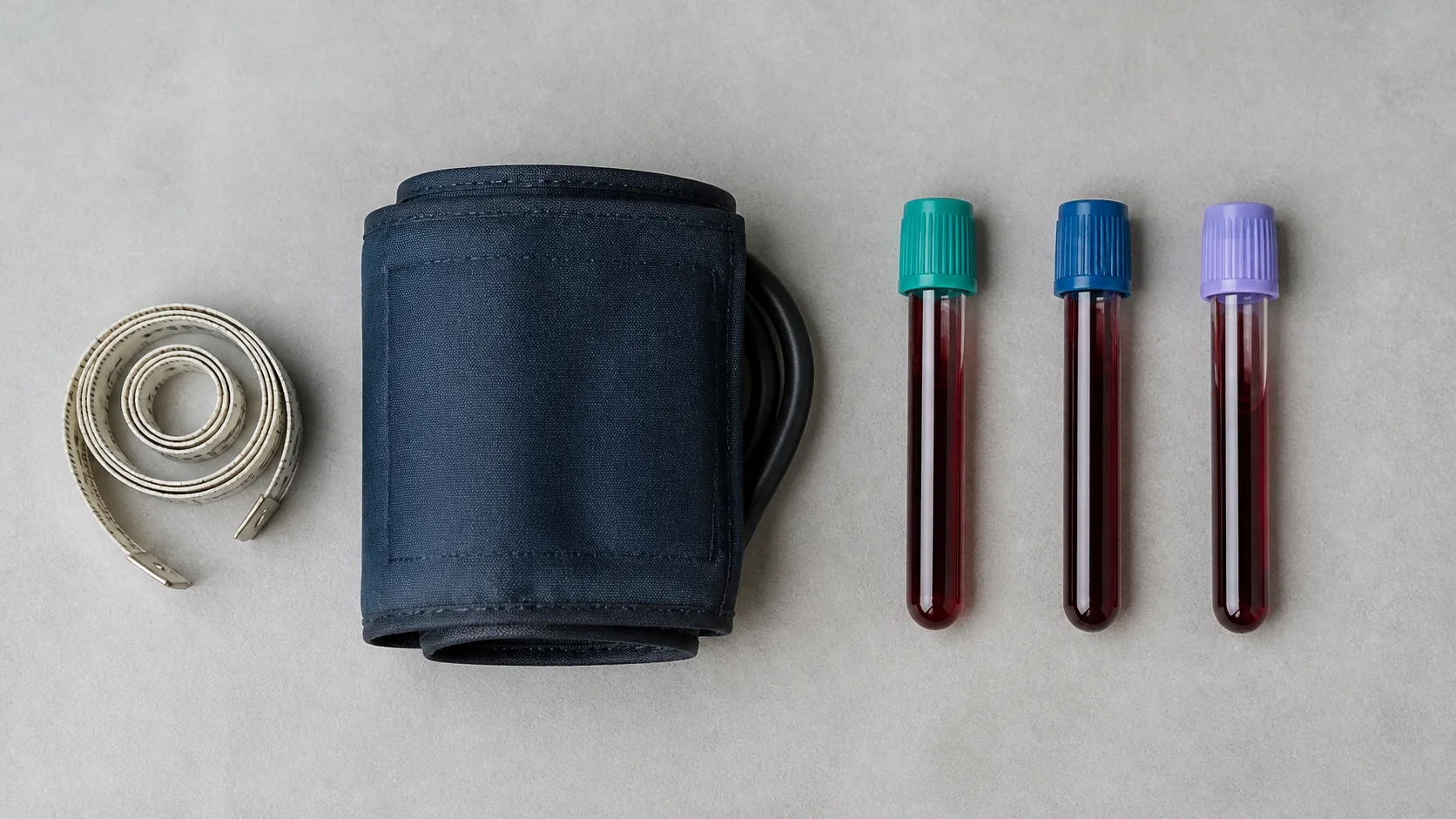
- A flexible tape measure, and a mirror so you can keep it horizontal.
- A validated upper-arm blood pressure monitor with the right cuff size. Wrist devices are less reliable.
- A fasting blood sample, usually 8 to 12 hours without food, reporting fasting plasma glucose, triglycerides and HDL cholesterol — a standard lipid panel plus a fasting glucose.
- A list of your medications: treatment for high blood pressure, high triglycerides, low HDL or high glucose counts as meeting that criterion even if the number now reads normal.
- Your sex and your ethnic background, because the waist threshold depends on both.
While you wait for the blood work, Waist-to-height ratio (WtHR) turns a single waist reading into a central-fat estimate that needs no population-specific cut-off.
How the measurement works
Each component is a yes or a no; nothing is summed and nothing is weighted.
Waist. Stand relaxed, breathe out normally, and measure at the end of that breath, tape snug but not compressing. Protocols differ: the WHO measures midway between the lowest rib and the top of the hip bone, the United States protocol at the top of the hip bone. They can disagree by a couple of centimeters, so pick one and reuse it.
Blood pressure. Sit with your back supported and feet flat for five quiet minutes, arm at heart level. Average two or three readings a minute apart, then repeat on another day.
Blood. Triglycerides rise steeply after a meal, so they and glucose need a fasting draw. HDL comes off the same lipid panel.
Counting is where errors creep in, because the waist threshold shifts with sex and population and the medication rules are easy to forget. Metabolic syndrome — the hidden pandemic of the 21st century applies the appropriate thresholds to the five values you enter and shows which criteria you meet.
How to read the result
| Component | Counts as abnormal when |
|---|---|
| Waist circumference | Above a sex- and population-specific threshold: commonly 94 cm (men) and 80 cm (women) in European-origin populations, 102 cm and 88 cm in the criteria long used in the United States, lower again in Asian populations. |
| Triglycerides | 150 mg/dL (1.7 mmol/L) or higher, or treated for high triglycerides. |
| HDL cholesterol | Below 40 mg/dL (1.0 mmol/L) in men, below 50 mg/dL (1.3 mmol/L) in women, or treated for low HDL. |
| Blood pressure | Systolic 130 mmHg or higher, or diastolic 85 mmHg or higher, or taking blood pressure medication. |
| Fasting glucose | 100 mg/dL (5.6 mmol/L) or higher, or treated for high glucose. |
Three or more abnormal components means metabolic syndrome is present. Two is the same direction of travel with one box unticked; they tend to arrive in sequence.
What it does not tell you
The count is a flag, not a diagnosis and not a risk estimate: it gives no probability of a heart attack or of diabetes over the next ten years, which needs a proper risk equation. The thresholds are hard lines through continuous variables, so a waist a centimeter under the cut-off is no different from one a centimeter over.
Nothing here measures insulin resistance directly, though it is the mechanism most components share. Fasting glucose can stay normal for years while insulin output climbs to keep it there, which is why an index such as METS-IR: metabolic score for insulin resistance can flag what the five criteria still call normal. HbA1c and post-meal glucose are absent from the definition too.
Waist is a proxy, not a scan: it cannot separate visceral from subcutaneous fat and says nothing about liver fat. The thresholds were derived in adults, not children or pregnancy. Because treatment counts, someone well controlled on medication still meets that criterion. And the checklist is silent on cause — sleep apnea, alcohol, thyroid disease, PCOS or a drug you take.
Related reading
Disclaimer. This article is for information only and does not replace medical advice. Talk to a qualified clinician before changing anything about your health.