Zinc
Zinc is an essential trace mineral that hundreds of enzymes and DNA-binding proteins need in order to function, and that the body keeps no dedicated store of. It runs through immune defense, wound healing, taste and smell, skin repair and protein synthesis. Almost all of it sits inside cells, mostly in muscle and bone, so intake has to be steady rather than occasional.
What it measures
The standard test is a blood draw reported as serum or plasma zinc, in micrograms per deciliter or micromoles per liter. It samples only the fraction circulating in blood; the reserve held in tissue cannot be measured routinely. Most of the zinc in plasma travels bound to Albumin, so a low albumin level drags the result down without saying anything about the zinc held in your tissues.
Timing changes the number too: levels fall after a meal and drift through the day, so a fasting morning draw is the one worth comparing over time. Hair and nail testing is not a reliable substitute. A fuller clinical reference on the test, and on what deficiency looks like in the immune system, skin and taste, is the Zinc entry in the Smart Longevity glossary.
Typical values
| Reading | What labs report | Notes |
|---|---|---|
| Serum or plasma zinc, adults | Commonly published intervals run near 70-120 mcg/dL (roughly 11-18 micromol/L) | The exact interval depends on the assay, on serum versus plasma, and on the laboratory |
| Deficiency cut-off | No single agreed number | Population cut-offs are set separately by sex, age, time of day and fasting status |
| Result taken during illness | Reads low whatever your stores are | Zinc shifts into the liver during the acute-phase response |
Read your value against the interval printed on your own report. Inflammatory markers rising for any reason – an infection, an injury, a chronic flare – pull serum zinc down within days, so one low reading taken while you are unwell is not proof of deficiency. The reverse holds as well: a result inside the range does not rule out mild depletion, which is why clinicians weigh symptoms, diet and risk factors alongside the number.
Why it matters for longevity
Immune function weakens with age, and zinc status tends to slip in the same direction: older adults eat less, absorb less, and more often carry conditions that increase losses. In observational data, low zinc status in older people is associated with more frequent infections, slower wound healing and greater frailty. Zinc is also built into copper-zinc superoxide dismutase, one of the enzymes that limits oxidative damage inside cells.
The trial evidence is narrower than the enthusiasm around it. In older adults with low intake or low measured status, supplementation has improved several laboratory measures of immune function, and some trials have reported fewer infection episodes; results are not uniform, and correcting a deficiency is not the same as a benefit in people who already have enough. Zinc lozenges started early may shorten a common cold somewhat, but the trials disagree on dose and form. No study shows that zinc supplements extend human lifespan.
What changes it
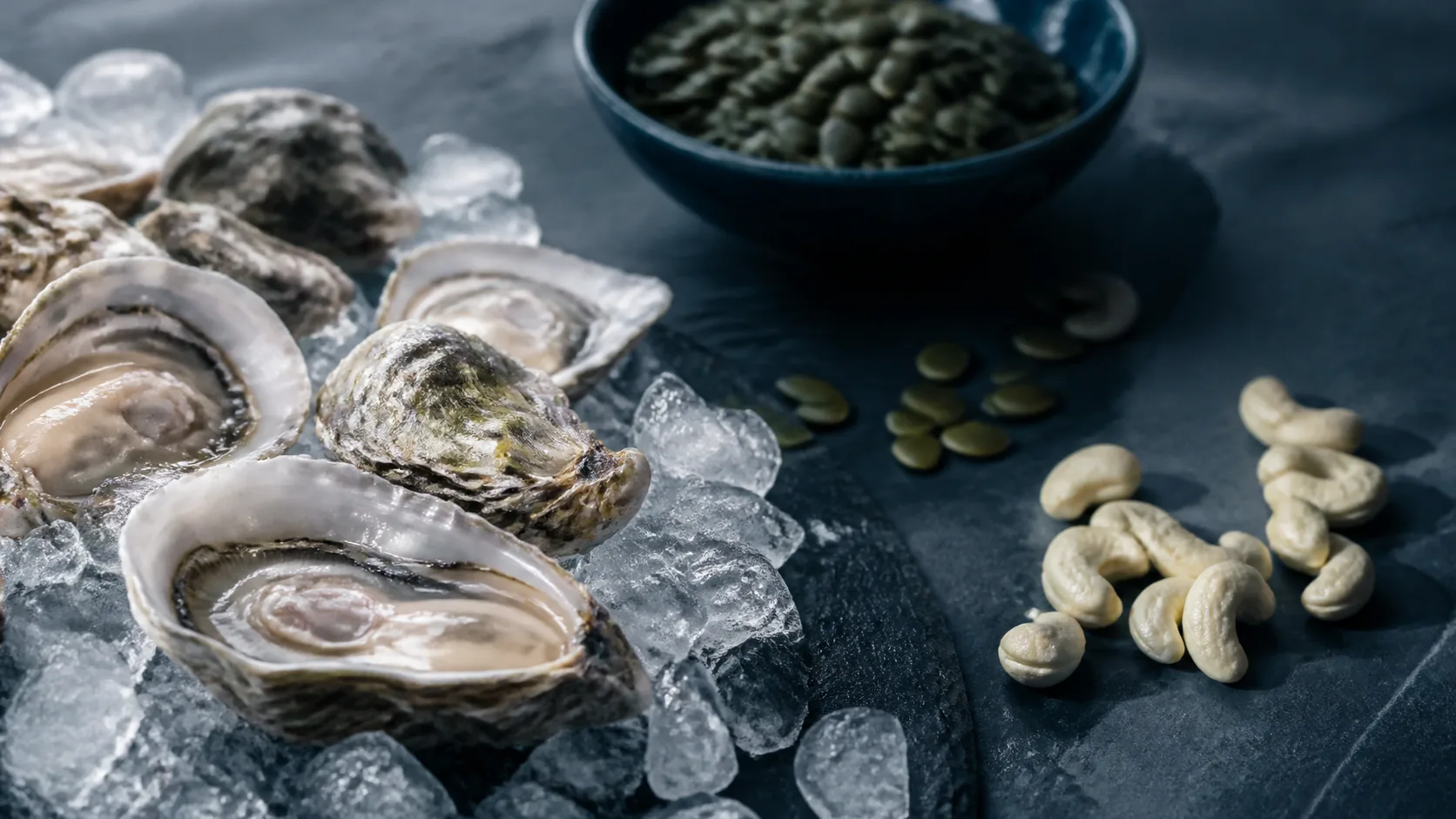
Food is the main lever. Oysters are by far the richest source, followed by red meat, poultry, crab, cheese and eggs. Legumes, nuts, seeds and whole grains carry zinc too, but also phytate, which binds it and lowers absorption; soaking, sprouting and fermenting help. People most likely to run short are those on mostly plant-based diets, older adults with small appetites, anyone with celiac disease, Crohn’s disease or a history of bariatric surgery, heavy drinkers, and people with chronic diarrhea.
Supplements close a confirmed gap, and more is not better. Sustained high-dose zinc blocks copper absorption and can produce copper deficiency with anemia and nerve damage, which is why upper intake limits for adults are set around 40 mg a day from food and supplements combined, and why larger doses belong under medical supervision. Zinc on an empty stomach commonly causes nausea, and it competes with high-dose iron and some antibiotics, so spacing doses apart matters.
Related reading
- How to Support Your Immune System as You Age
- How to Build a Longevity Supplement Plan
- How to Build a Longevity Diet: A Practical Guide
Disclaimer. This article is for information only and does not replace medical advice. Talk to a qualified clinician before changing anything about your health.