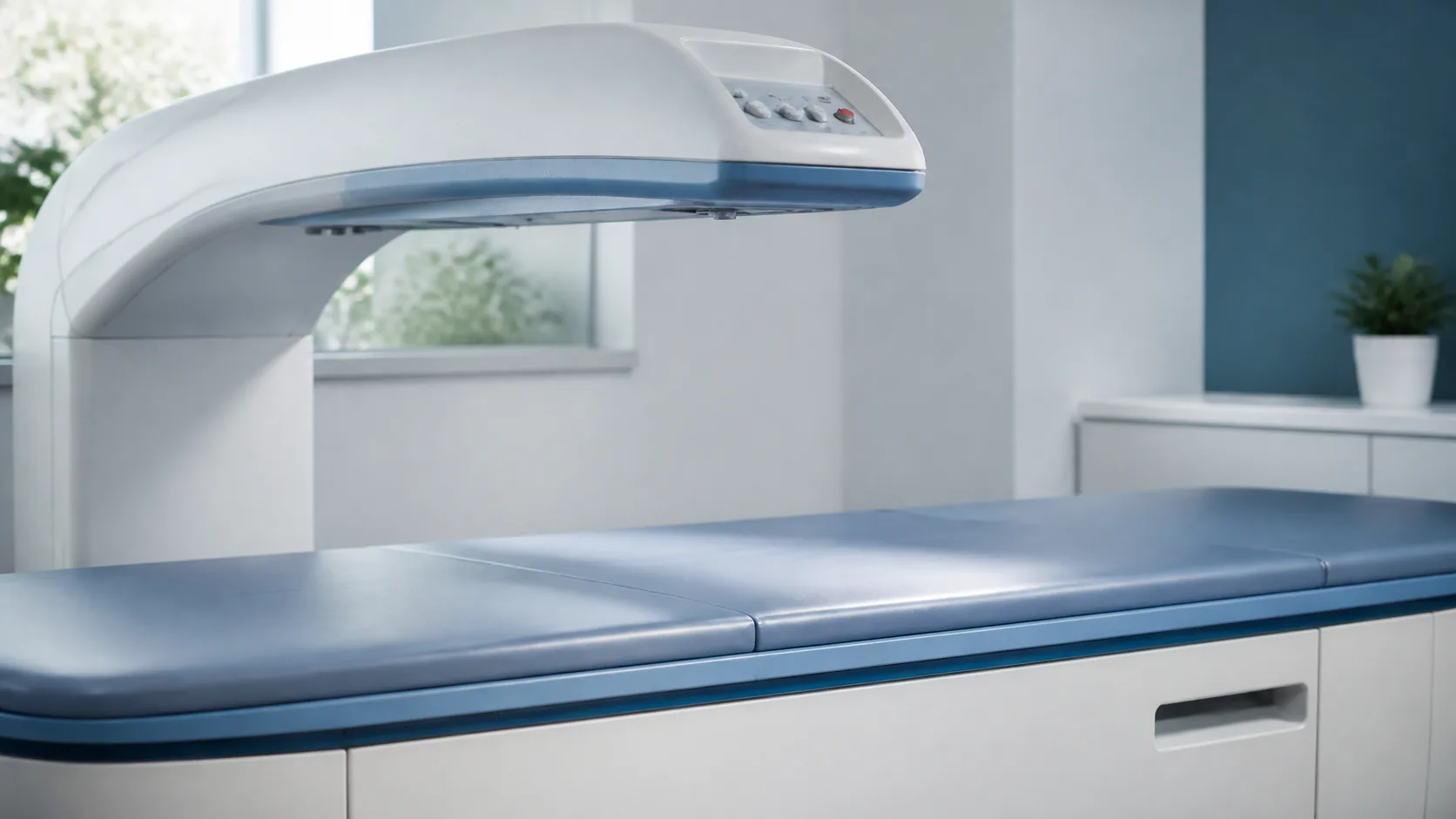
DEXA
DEXA (dual-energy X-ray absorptiometry, often written DXA) is a low-dose X-ray scan that measures bone mineral density and, in the same session, how much of the body is fat, lean tissue and bone. It is the reference method for diagnosing osteoporosis and the practical standard for body composition. You lie fully clothed on a padded table while a scanning arm passes over you, and it takes ten to twenty minutes. The test is also called DXA, bone densitometry or DEXA (dual-energy absorptiometry).
What it measures
The scanner sends two X-ray beams of different energies through the body. Bone, fat and lean soft tissue absorb them in different proportions, so software can solve for how much of each lies along the scan path.
The bone report gives areal bone mineral density in grams per square centimeter, usually at the lumbar spine and hip. Because it is a flat projection rather than a true volume, body size influences the result, and spinal arthritis, aortic calcification or metal hardware can inflate it. Software converts that density into a T-score and a Z-score.
The body composition report gives fat mass, lean soft tissue and bone mineral content, whole-body and region by region. Most machines also estimate the fat packed around the abdominal organs, reported as Visceral fat, which a scale cannot see. Radiation exposure is small, below a standard chest X-ray.
Typical values
Bone results are read as T-scores: how many standard deviations your density sits above or below the mean for a healthy young adult. The World Health Organization categories below are what most reports print.
| Category | T-score |
|---|---|
| Normal | -1.0 and above |
| Low bone mass (osteopenia) | Between -1.0 and -2.5 |
| Osteoporosis | -2.5 and below |
| Severe osteoporosis | -2.5 or below plus a fragility fracture |
They were defined for postmenopausal women and men from about age 50. Younger adults and children are read with the Z-score, which compares you to peers of the same age and sex.
Body composition has no equivalent official cut-offs. Body fat bands differ between reference sources, and thresholds for low muscle mass vary by consensus group and reference population. Machines from different manufacturers are not interchangeable, so compare a scan only with earlier ones from the same device and read the trend, not one figure.
Why it matters for longevity
Low bone density predicts fracture, one of the sharpest turning points in later life. Hip fracture in older adults is followed in cohort studies by a marked excess of deaths over the next year, and by lasting loss of independence in many survivors. Bone loss is silent until something breaks, so a scan is often the only warning that Osteoporosis has developed, and the femoral neck value feeds fracture risk calculators.
The composition side carries its own signal. Abdominal fat is associated with insulin resistance, type 2 diabetes and cardiovascular disease more strongly than fat under the skin, and low muscle mass, the defining feature of sarcopenia, is associated with falls, frailty and higher all-cause mortality. These are associations from observational data: a scan describes where you stand, it does not change what happens next.
What changes it
- Loading the skeleton. Resistance training and impact activity such as jumping or brisk walking stimulate bone; swimming and cycling, good as they are for the heart, do not.
- Calcium, vitamin D and protein. Correcting a shortfall helps; piling supplements on an adequate diet does much less.
- Medication. Long-term glucocorticoids lower bone density. Bisphosphonates and denosumab raise it and cut fracture risk in randomized trials.
- Hormonal change. Bone loss accelerates in the years around menopause as estrogen falls.
- Smoking, heavy drinking and being underweight. All work against bone, and fast weight loss without training or enough protein strips lean mass along with fat.
- Outside your control. Age, sex, genetics and the peak bone mass you built in your twenties set the starting point. Bone changes slowly, so repeat scans are usually a year or more apart.
Related reading
- How to Strengthen Bones and Prevent Osteoporosis
- Strength Training Against Sarcopenia
- Health Through Menopause: A Longevity Guide for Women
Disclaimer. This article is for information only and does not replace medical advice. Talk to a qualified clinician before changing anything about your health.