How to choose a biological age test
Choosing a biological age test means choosing which layer of the body gets measured — a questionnaire, a routine blood panel, a DNA methylation kit or a clinic test — because each needs a different sample and answers a different question. There is no single test that returns “your” biological age. Some you can finish at the kitchen table in ten minutes; others need a venous draw, a specialist laboratory or equipment you cannot buy.
What you need
- A reason, decided before you order anything: a baseline, a way to track a change you are making, or one specific worry.
- Your chronological age and sex — every clock scores you against them, so a result is always a comparison.
- For a no-lab estimate: a tape measure, scales, a blood pressure cuff and your resting heart rate.
- For a blood-panel clock: a venous draw, usually fasting, covering albumin, creatinine, fasting glucose, C-reactive protein, alkaline phosphatase and a complete blood count.
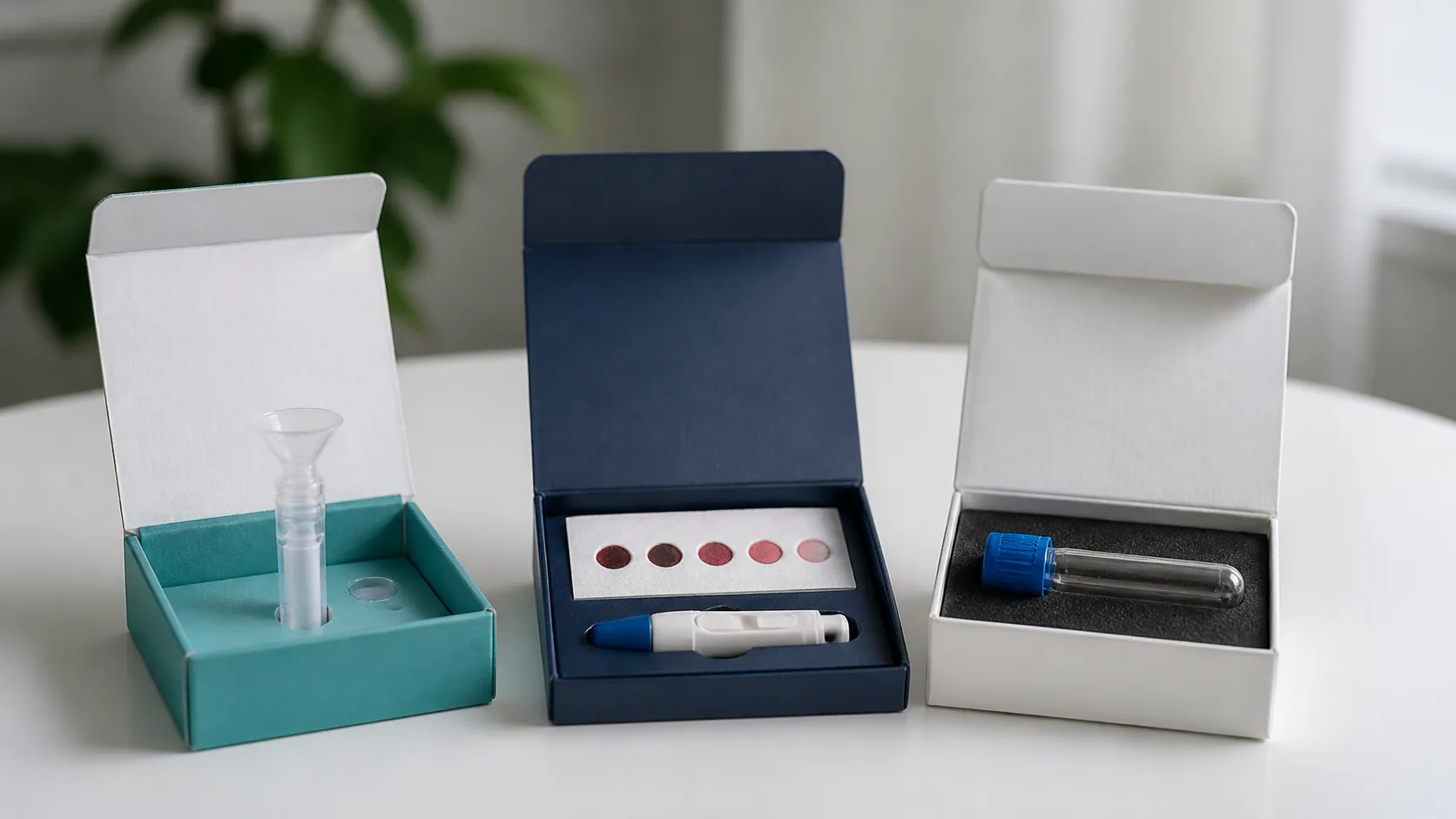
- For an epigenetic clock: a mail-in blood spot or saliva kit processed by a methylation laboratory.
- For an organ-level clock: a clinic visit — an ECG, an echocardiogram, an arterial stiffness measurement or a supervised exercise test.
- A plan to repeat it: same method, same laboratory, same conditions.
Start at the cheap end. A tape-measure-and-questionnaire tool such as Estimated biological age from your body — no lab tests already shows whether the obvious levers are in order, and buying a methylation kit before you know your own blood pressure is an odd order of operations.
How the measurement works
Every clock shares one architecture. Something is measured in a cohort whose ages and later outcomes are known, an algorithm learns how to weight those measurements, and the total is rescaled into years so a typical person lands near their own age. The families differ in what was measured and what the algorithm was trained to predict. Working through the calculators grouped under Biological Clocks & Cellular Aging is the quickest way to see how differently they behave on one person.
First-generation methylation clocks were trained to predict chronological age itself, so the error against your birthday is what gets interpreted. Second-generation clocks were trained against mortality and clinical measures instead, which is why they track health outcomes more closely. A third approach estimates the rate of change rather than an accumulated age: DunedinPACE reports biological years per calendar year, so a value of one means you are aging at the population pace. Blood-panel clocks apply the same statistics to laboratory values your clinic already orders, and organ clocks narrow the question to one system — heart, arteries, aerobic fitness, cognition.
How to read the result
| Test family | What it takes | What its number is good for |
|---|---|---|
| Questionnaire and body measurements | Home, minutes, no cost | A first screen; shows which habits dominate |
| Routine blood panel clock | One venous draw | A repeatable baseline you can reorder anywhere |
| DNA methylation clock | Mail-in kit, specialist lab | Research-grade signal; the outcome-trained versions are the useful ones |
| Pace-of-aging clock | Same kit, different algorithm | Rate rather than accumulated age |
| Organ or system clock | Clinic or supervised exercise test | A specific, actionable target, not a whole-body number |
Whatever the family, the raw age is mostly carried by your chronological age and means little alone. The gap between the two carries the information, and its direction and stability matter more than its size. One reading is a data point; the same direction on a repeat months later, under the same conditions, is a finding. Two families agreeing is more persuasive than any single number, however expensive the kit behind it.
What it does not tell you
Clocks routinely disagree in the same person. A flattering blood age says nothing about your arteries, your bone density or your brain, and two methylation clocks run on one sample can land years apart. Shopping for the test that gives the nicest answer is the common mistake here; the trade-offs between methods are laid out in Biological age tests: what to measure and how to choose a method.
None of these is a diagnosis, and none can rule out disease. Most consumer biological age tests are sold as wellness products rather than regulated diagnostics, so quality control varies. Technical noise is real too: repeat runs of one sample can differ, which is part of why the more reliable later-generation methods were built.
Consider who each model was built in. The large reference cohorts skew middle-aged, of European ancestry and healthier than the general population, so performance in younger adults, other ancestry groups and acutely unwell people is less well established. And moving a clock is not the same as living longer: no biological age test is accepted as a surrogate endpoint proving a treatment works. The number describes where you sit today; it does not tell you what to change, and it does not replace blood pressure, lipids, glucose and a clinician.
Related reading
- What Biological Age Is and How to Measure It
- Epigenetic Clocks: Measuring Age from DNA
- Biomarker of aging
- DunedinPACE
Disclaimer. This article is for information only and does not replace medical advice. Talk to a qualified clinician before changing anything about your health.