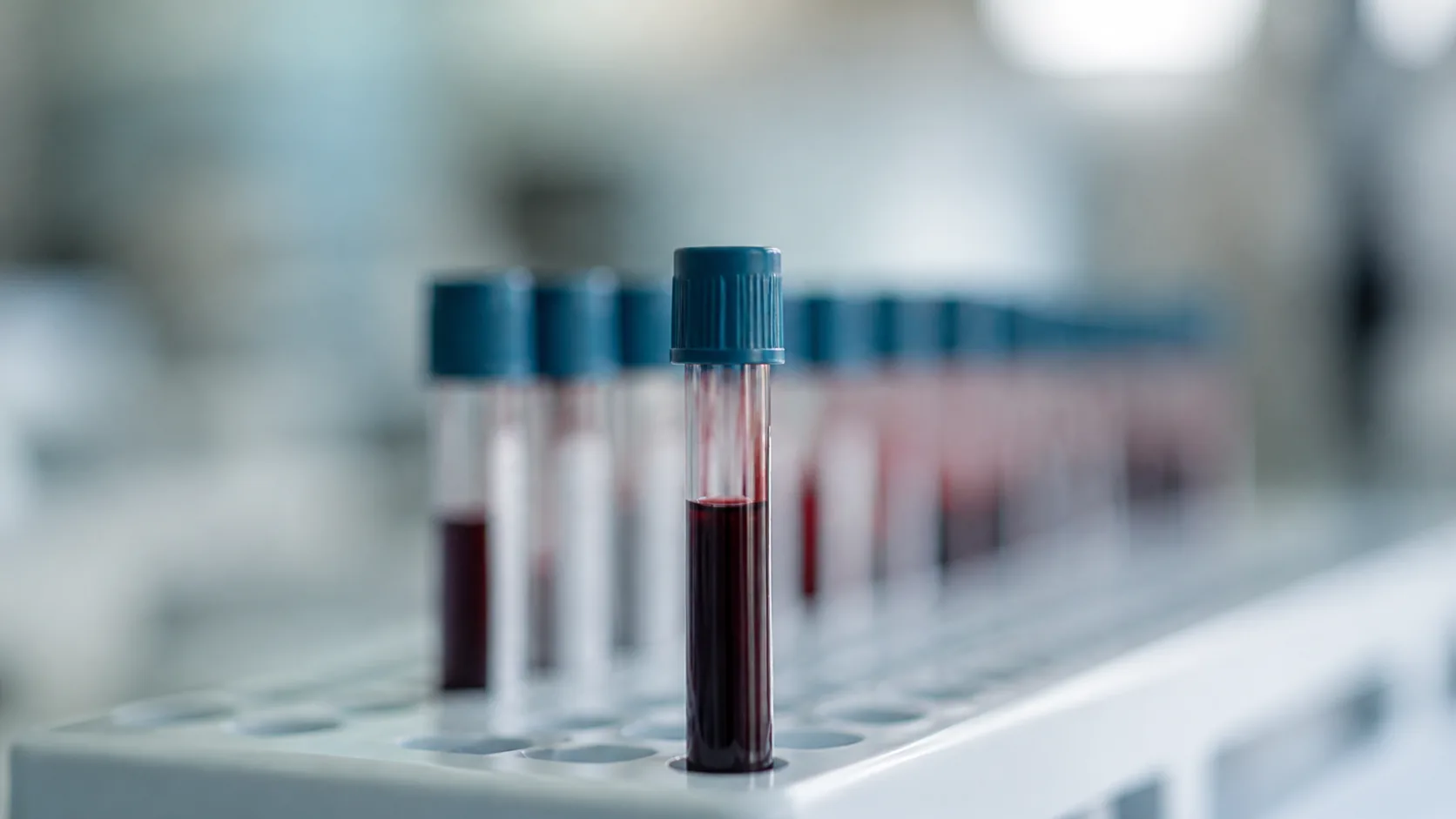
Biomarker of aging
A biomarker of aging is a measurable biological indicator that reflects how far and how fast a body has aged, better than the number of years since birth. The idea behind it is simple: aging leaves physical traces in DNA, blood, tissue and physical function, and reading those traces says more about someone’s remaining health than a date of birth does. Dozens of candidates exist, from DNA methylation patterns to walking speed. None has been accepted as a stand-alone endpoint that regulators or clinicians act on, so they are research and monitoring tools rather than diagnoses.
What it measures
Any single reading is just a number from a blood draw, a saliva or tissue sample, a scan, a physical test or a questionnaire. What makes it a Biomarker of aging is the criteria the field applies to it: it should predict future health outcomes better than calendar age alone, track a basic process of aging rather than one specific disease, be measurable repeatedly without harming the person, and ideally behave the same way in laboratory animals as in humans. Most candidates satisfy some of those conditions and fail others.
In practice the candidates fall into four groups. Molecular markers are read from cells and plasma: DNA methylation at defined sites, which is what an Epigenetic clock uses, along with telomere length, plasma protein signatures and metabolite panels. Clinical markers are routine labs — inflammatory markers, glucose control, kidney and liver values, blood counts, lipids, blood pressure. Functional markers are physical capacity: grip strength, gait speed, lung function, aerobic fitness, balance. Composite indices bundle many of these into one score, and when such a score is expressed in years it becomes an estimate of Biological age.
Why it matters for longevity
Biomarkers of aging are the only practical way to study aging in living people. Waiting for death or disease to compare two interventions takes decades; a marker that moves in months makes a trial possible at all. In large cohort studies, adverse readings on several of these markers — low aerobic fitness, weak grip, slow gait, persistent inflammation, an epigenetic age running ahead of calendar age — are associated with higher rates of disability, chronic disease and death, and the association usually survives adjustment for age and known risk factors.
The gap is causation. A marker that travels with risk is not the same as a marker whose improvement reduces risk, and no biomarker of aging has yet been validated as a surrogate endpoint in that stronger sense. Trials that move a clock reading slightly have not shown that the people involved go on to live longer or healthier lives. Read a result as information about your current state, not as proof that an intervention worked.
What changes it
It depends entirely on which marker you are looking at, and honest answers include “nothing you control”. Calendar age rises regardless. Genetic contributions to telomere length or methylation patterns are fixed. Some readings are also noisy in the short term: inflammatory markers spike during an infection, and epigenetic results shift with sample handling and assay version, so a single surprising value is a reason to retest rather than to act.
The markers that do respond move on the familiar levers. Aerobic and strength training raise fitness, grip strength and gait speed within months. Stopping smoking changes several molecular markers directly. Diet, weight, sleep and alcohol shift glucose control, lipids and inflammation. Treating high blood pressure or high glucose moves the clinical markers by definition. Where a marker responds to an established treatment, follow the treatment guidance rather than chasing the number.
Related reading
- Which Blood Tests Reflect Aging and How to Read Them
- What Biological Age Is and How to Measure It
- Epigenetic Clocks: Measuring Age from DNA
- Grip Strength as a Marker of Longevity
- Biological age
Disclaimer. This article is for information only and does not replace medical advice. Talk to a qualified clinician before changing anything about your health.