How to calculate your PhenoAge from a blood test
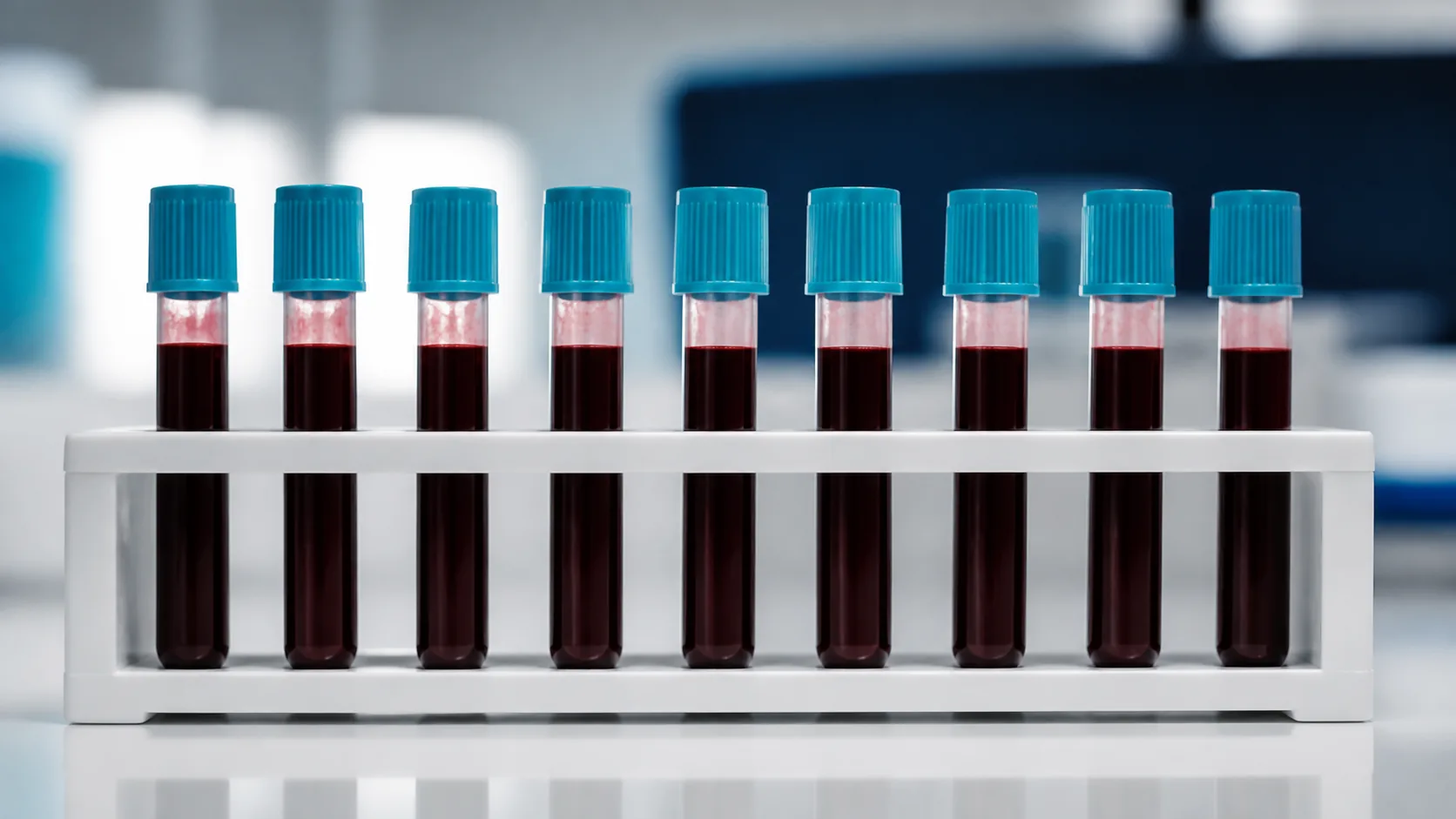
PhenoAge turns nine routine blood results plus your chronological age into one biological age in years, and getting it takes a single blood draw at a laboratory — no home device produces it. The panel is ordinary: a metabolic panel, a complete blood count, and a C-reactive protein test. The arithmetic is the awkward part, because the published equation expects particular units. Our entry on PhenoAge covers what the score means; this page is about getting your own.
What you need
Your date of birth, and one blood draw after an overnight fast — laboratories usually ask for 8 to 12 hours without food, since one input is fasting glucose. Nine values:
- From a metabolic panel: albumin, creatinine, fasting glucose, alkaline phosphatase.
- From a complete blood count with differential: white blood cell count, lymphocyte percentage, mean cell volume, red cell distribution width.
- A C-reactive protein result. A high-sensitivity assay measures the same protein in different units, so keep the unit your report prints.
Nothing there is exotic; a clinician can order it all in one requisition — but it is still a clinic measurement. Without a panel, a questionnaire tool such as Estimated biological age from your body — no lab tests answers a different, softer question and is not a PhenoAge.
How the measurement works
PhenoAge was published by Morgan Levine and colleagues in 2018. The nine markers were not picked for describing aging in theory; they were selected statistically, in a large US survey cohort, for how well they separated people who died in the following years from those who did not. Each value carries its own weight, joins a chronological age term in a mortality model, and the result is converted back into years.
Higher albumin and a higher lymphocyte percentage pull the score younger. Higher creatinine, glucose, C-reactive protein, alkaline phosphatase, white cell count, mean cell volume and red cell distribution width push it older. Unit conversion is where hand calculation goes wrong: albumin, glucose, creatinine and CRP are each reported in two different units, and US-style units in an equation written for international ones return a plausible-looking wrong answer. That is what the PhenoAge Calculator — biological age from a blood test is for: enter the nine values with the units your report prints.
How to read the result
The output is an age in years, which alone says little. What gets read is the gap against your chronological age, called PhenoAge acceleration: negative means your blood chemistry resembles that of younger people, positive the opposite, near zero means you sit where your birth year predicts.
There are no standardized bands. No consensus cut-off marks where acceleration becomes clinically abnormal, and in research the gap is often a residual calculated inside one cohort, so the same results can differ slightly between tools. Small gaps sit within the run-to-run variation of the tests. Treat the first result as a baseline; if you retest, do it fasted, at the same laboratory, when you are well.
What it does not tell you
It is not an epigenetic clock. DNAm PhenoAge, a related version trained on DNA methylation, needs a methylation array, not a blood panel, and the two are not interchangeable. Nor is it the only blood-derived age estimate: the same draw run through the Bortz Blood Age Calculator will not return the same year, because it was built on different markers.
Things that are not aging distort it easily. An infection raises C-reactive protein and white cell count and lowers lymphocyte percentage, so a sample drawn during or soon after an illness reads old for a reason that will resolve. Dehydration shifts albumin and creatinine, and creatinine tracks muscle mass as well as kidney function, so muscle can nudge the score older.
The evidence is also observational. PhenoAge was developed mostly in a US population sample, its behavior in other groups is less certain, and no trial has shown that lowering the score lowers anyone’s risk of dying. It summarizes risk visible in blood on the day of the draw — not bone density, fitness, cognition or cancer screening.
Related reading
- What Biological Age Is and How to Measure It
- Which Blood Tests Reflect Aging and How to Read Them
- Epigenetic Clocks: Measuring Age from DNA
- Biomarker of aging
Disclaimer. This article is for information only and does not replace medical advice. Talk to a qualified clinician before changing anything about your health.