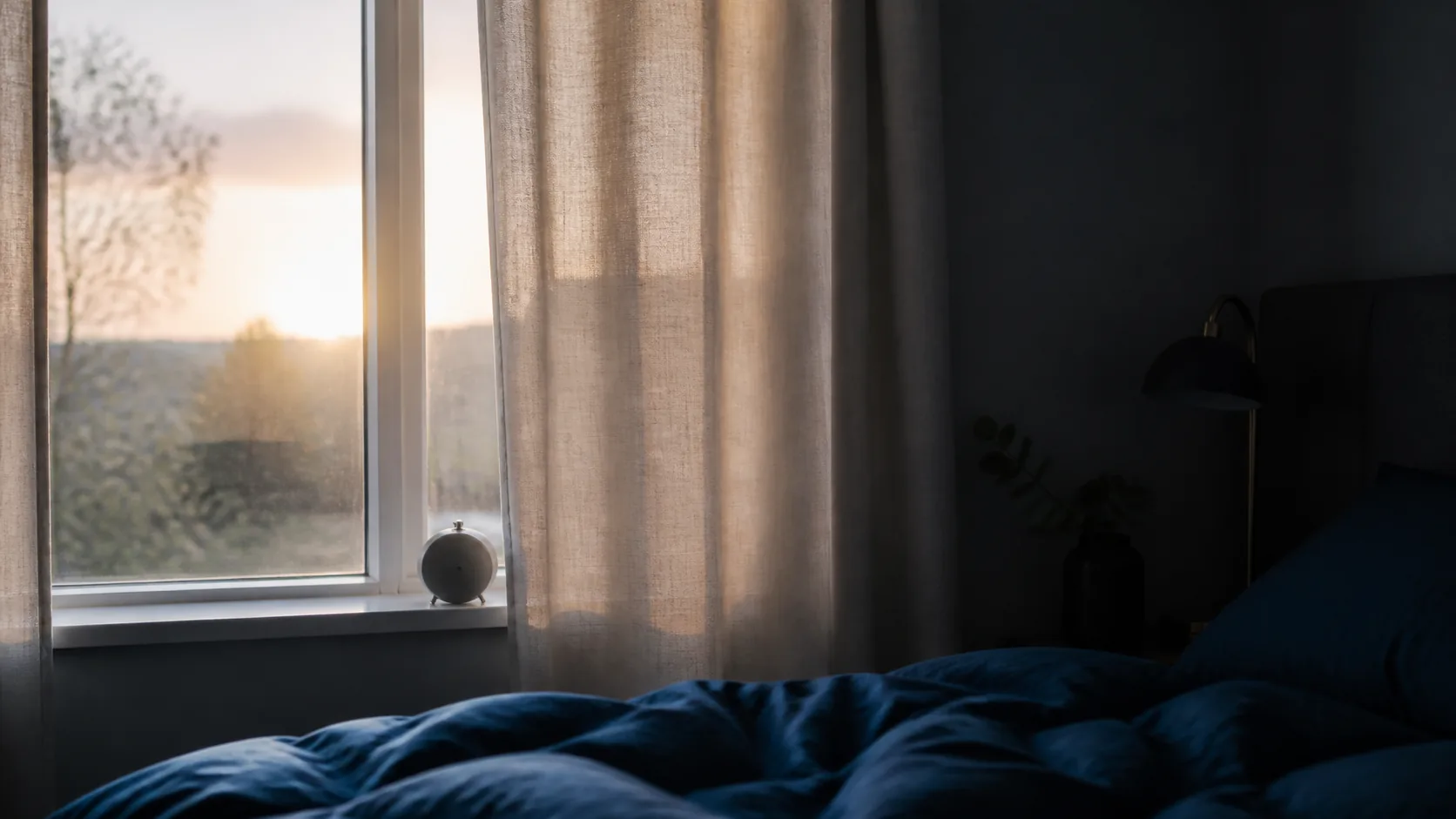
Circadian rhythm
Circadian rhythm is the internal, roughly 24-hour cycle that times your sleep and waking, hormone release, body temperature, digestion and cellular repair, and that is reset each day mainly by light. The master clock sits in the suprachiasmatic nucleus, a paired cluster of neurons in the hypothalamus. It holds the semi-independent clocks in nearly every other tissue — liver, gut, muscle, fat — in step with each other and with the day outside. The clock genes behind it, a feedback loop running over about a day, earned the 2017 Nobel Prize in Physiology or Medicine. The reference entry on Circadian rhythm — the biological clock covers the same ground in more depth.
What it measures
There is no circadian number on a lab report; the clock is inferred from the timing of things that swing predictably across the day. The most trusted research marker is dim light melatonin onset: melatonin is sampled in saliva or blood under dim evening lighting, and the point where it begins to rise marks the internal biological evening. Core body temperature has its low in the second half of the night. The morning peak and overnight trough in Cortisol follow the clock too, which is why a cortisol draw means little unless the time is recorded.
Outside a laboratory, timing is estimated, not measured. Actigraphy and wearables record when you actually sleep, and chronotype questionnaires place you on the early-to-late scale. Both describe behavior, not clock phase: a watch can show your sleep midpoint drifting later at weekends, but not when your melatonin rises.
Why it matters for longevity
With age, circadian rhythms tend to flatten, shift earlier and become easier to disrupt, and sleep fragments along with them. Living against the clock is associated with worse long-term health: people on rotating or permanent night shifts have higher rates of obesity, type 2 diabetes, Metabolic syndrome and cardiovascular disease, and the International Agency for Research on Cancer classifies night shift work that involves circadian disruption as probably carcinogenic to humans. Several cohorts report that the regularity of sleep timing tracks with mortality risk, not only how long people sleep.
Those are observational findings, and shift workers differ from day workers in income, diet, smoking and sleep debt, so the clock’s own share is uncertain. Short controlled studies close part of the gap: when healthy volunteers eat and sleep out of phase with their internal clock, glucose handling, blood pressure and appetite hormones move in an unfavorable direction within days, and recover when the schedule is realigned. The direction of effect is consistent; a human lifespan claim is not proven.
What changes it
Light is the dominant lever. Retinal cells containing melanopsin, most sensitive to short-wavelength blue light, report daylight straight to the master clock. Getting outside soon after waking anchors the day, because outdoor light even under cloud is far brighter than indoor lighting; dimming lamps and screens in the last hours before bed keeps the evening melatonin rise from being pushed back. Holding your wake time to about the same hour every day, weekends included, does more than any single evening habit.
Meal timing sets the clocks in the liver and gut, part of the rationale behind time-restricted eating; large late meals, alcohol and evening caffeine work against the night phase. Exercise nudges timing, and lands best in the morning or afternoon if you run late. A small dose of melatonin some hours before the target bedtime acts as a time signal rather than a sleeping pill; its legal status varies by country, so discuss it with a clinician. Some of this is not yours to move: chronotype is partly genetic, and a fixed night shift is a work constraint, not a lifestyle choice. Then the aim is damage control: steady sleep timing on days off, bright light during the shift, real darkness for sleep.
Related reading
- How Sleep Affects Aging and How Much You Need
- How to Improve Sleep: A Practical Sleep Hygiene Protocol
- Stress and Aging: How Chronic Stress Wears You Down
- Intermittent Fasting and Longevity: The Evidence
Disclaimer. This article is for information only and does not replace medical advice. Talk to a qualified clinician before changing anything about your health.