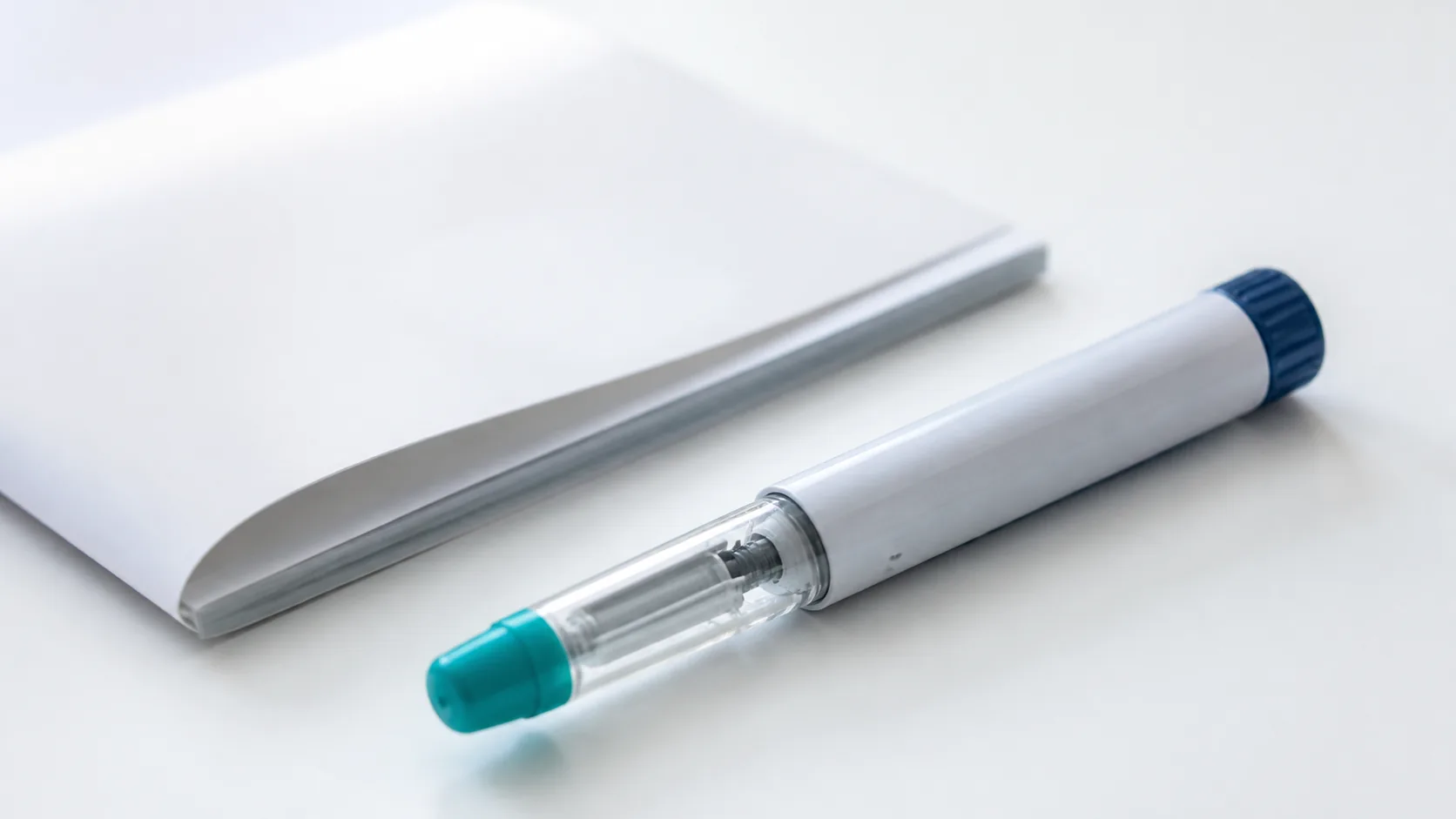
The BMI Thresholds for GLP-1 Medication
By Longevity Lab · Published: August 23, 2026
Based on peer-reviewed research — full source list at the end of this article. This is educational information, not medical advice.
- The standard licensed thresholds are BMI 30 and above, or 27 and above with a weight-related condition.
- Qualifying conditions typically include type 2 diabetes, hypertension, dyslipidemia and obstructive sleep apnea.
- In STEP-1, semaglutide 2.4 mg produced 14.9% mean weight loss at 68 weeks versus 2.4% on placebo.
- In SURMOUNT-1, tirzepatide 15 mg produced 20.9% at 72 weeks.
- Thresholds are typically 2.5 units lower for people of Asian descent; weight regain after stopping is well documented.
GLP-1 receptor agonists licensed for weight management are indicated at a body mass index of 30 and above, or 27 and above with at least one weight-related condition — most commonly type 2 diabetes, hypertension, dyslipidemia or obstructive sleep apnea. The two-tier structure is why a clinician asks about your blood pressure and glucose before asking about your weight: at a BMI of 28, whether you qualify depends entirely on the answer.
The thresholds in practice
| BMI | Without comorbidity | With a weight-related condition |
|---|---|---|
| Under 27 | Not indicated | Not indicated |
| 27.0–29.9 | Not indicated | Indicated |
| 30.0 and above | Indicated | Indicated |
For adults of South, South-East and East Asian descent, most guidance lowers both figures by roughly 2.5 units, in line with the same reasoning that lowers the obesity threshold itself — BMI — body mass index corresponds to more adiposity and more metabolic risk at a lower value in those populations.
Access and reimbursement are a separate matter from licensing, and often stricter. Many health systems and insurers add requirements: a documented prior attempt at structured lifestyle intervention, a higher BMI floor, or specific comorbidities from a shorter list. The licensed threshold tells you what is medically indicated, not what will be paid for.
Why 27 with a condition, and 30 without
The logic is that a threshold is a proxy for risk, and a comorbidity is direct evidence that the risk has already materialized. Someone at BMI 28 with type 2 diabetes and hypertension is at higher absolute risk than someone at BMI 31 with neither, so treating the first at a lower index is internally consistent.
It also mirrors how Metabolic syndrome is assessed: not by any single measurement but by how many components are present together. Three of five criteria is the diagnostic threshold, and someone can meet it comfortably at a BMI of 27.
The 2025 Lancet Commission on clinical obesity pushes further in the same direction, arguing that treatment decisions should follow evidence of organ dysfunction rather than a BMI value at all. Prescribing practice has not caught up with that, but the direction of travel is clear.
What the trials actually found
STEP-1 randomized 1,961 adults with a BMI of 30 or above, or 27 with a comorbidity and without diabetes, to weekly semaglutide 2.4 mg or placebo alongside lifestyle intervention. Mean weight change at 68 weeks was −14.9% with semaglutide against −2.4% with placebo, and 86% of the treated group lost at least 5%.
SURMOUNT-1 tested tirzepatide, a dual GIP/GLP-1 agonist, in 2,539 adults. At 72 weeks, mean weight change was −20.9% at the 15 mg dose against −3.1% on placebo.
SELECT then addressed the question that matters most: whether the weight loss translates into events. In 17,604 adults with cardiovascular disease and overweight or obesity but no diabetes, semaglutide reduced major adverse cardiovascular events by 20% over a mean of about 40 months.
These are large effects by any standard in this field, and they are the reason the medications changed clinical practice rather than merely adding an option.
What the thresholds do not capture
The same weaknesses as everywhere else in this cluster. A muscular adult at BMI 31 with a 88 cm waist and clean bloods is qualified by the criteria and is arguably not the intended patient. An adult at BMI 26 with a 104 cm waist, raised triglycerides and fatty liver is not qualified by BMI alone, and looks a great deal more like one.
Waist circumference is not in the licensing criteria, which is a known gap. If your index sits just under a threshold, it is worth having the waist, fasting glucose, HbA1c and lipid measurements in hand — the comorbidity route is often the one that applies, and it requires evidence rather than an estimate. Risk of developing diabetes scores the diabetes side of that from the standard inputs.
Run our BMI calculator to see exactly where you sit relative to 27 and 30, and the Body Mass Index (BMI) tool for the risk framing alongside it.
Two things worth knowing before starting
Weight returns when the medication stops. The STEP-1 extension found participants regained about two-thirds of their lost weight within a year of discontinuation, with cardiometabolic improvements reverting alongside. These are treatments for a chronic condition, not a course.
A substantial share of the loss is lean mass. Body composition substudies suggest roughly 25–40% of the weight lost is lean tissue — similar to other rapid weight loss but on a larger absolute loss. Resistance training and protein intake of at least 1.2 g per kilogram matter more here than in ordinary dieting, not less.
Neither point argues against the medications. Both argue for planning the training and the nutrition alongside them rather than afterwards.
Frequently asked questions
What BMI do you need for weight loss injections?
30 and above, or 27 and above with at least one weight-related condition such as type 2 diabetes, hypertension, dyslipidemia or sleep apnea.
What counts as a weight-related condition?
Most commonly type 2 diabetes, prediabetes, hypertension, dyslipidemia, obstructive sleep apnea and cardiovascular disease. The exact list varies by jurisdiction and payer.
How much weight do GLP-1 medications produce?
In trials, about 15% of body weight at 68 weeks with semaglutide 2.4 mg and about 21% at 72 weeks with tirzepatide 15 mg, alongside lifestyle intervention.
Do you regain the weight after stopping?
Largely, yes. Trial extensions found roughly two-thirds of the lost weight returned within a year of discontinuation, with cardiometabolic gains reverting in parallel.
Sources
Sources (4)
- Wilding JPH, Batterham RL, Calanna S, et al. Once-weekly semaglutide in adults with overweight or obesity (STEP 1). N Engl J Med. 2021;384:989–1002. PubMed →
- Jastreboff AM, Aronne LJ, Ahmad NN, et al. Tirzepatide once weekly for the treatment of obesity (SURMOUNT-1). N Engl J Med. 2022;387:205–216. PubMed →
- Lincoff AM, Brown-Frandsen K, Colhoun HM, et al. Semaglutide and cardiovascular outcomes in obesity without diabetes (SELECT). N Engl J Med. 2023;389:2221–2232. PubMed →
- Wilding JPH, Batterham RL, Davies M, et al. Weight regain and cardiometabolic effects after withdrawal of semaglutide: the STEP 1 trial extension. Diabetes Obes Metab. 2022;24:1553–1564. PubMed →
Disclaimer. This article is for information only and does not replace medical advice. Talk to a qualified clinician before changing anything about your health.